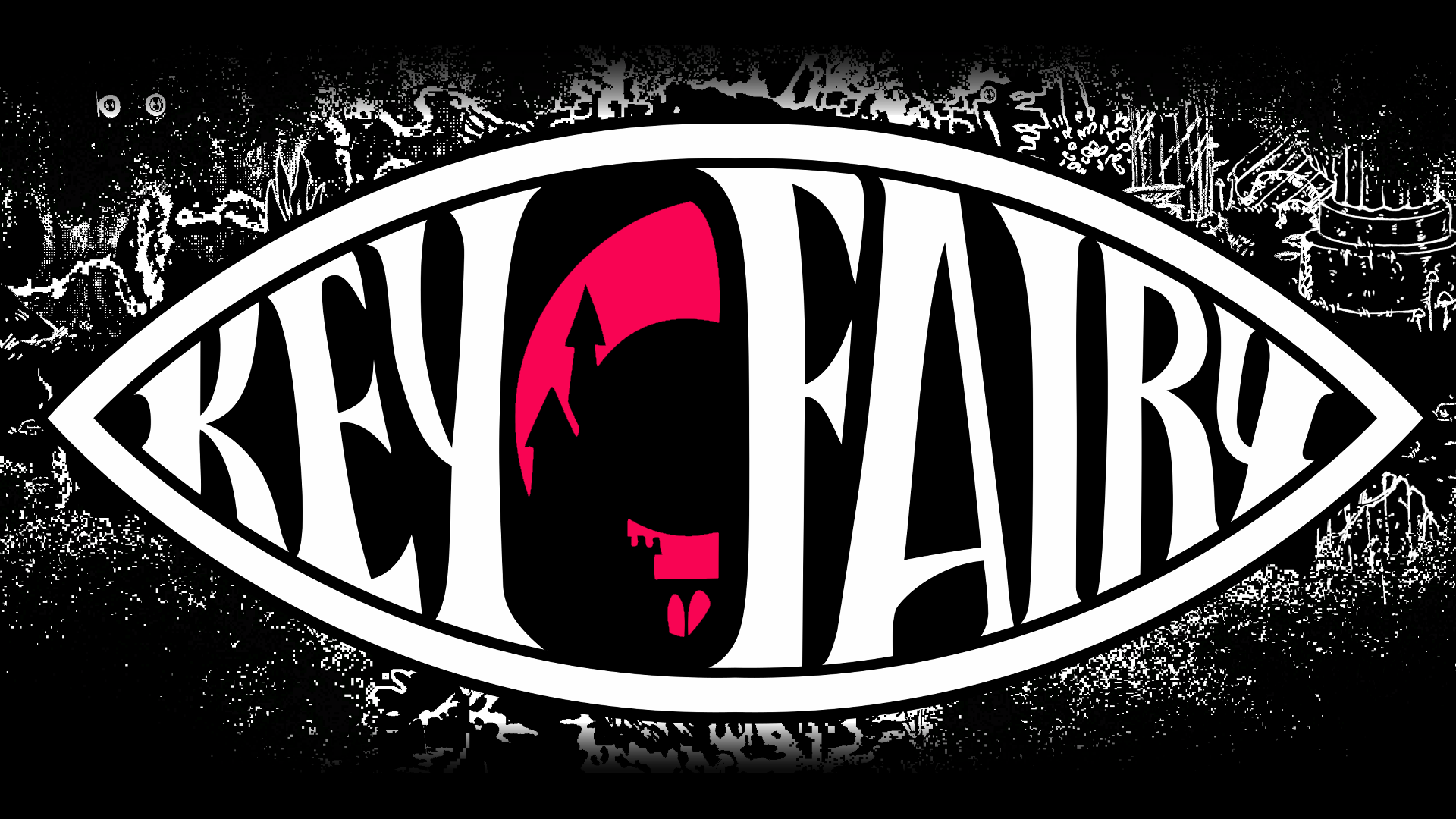
Key Fairy is full of contradictions. It’s a bullet hell that rejects violence. A demanding action game that embraces accessibility. A dark fantasy adventure that’s consistently funny. Yet somehow, all of those competing ideas come together to create something remarkably cohesive.
Those contrasts helped Key Fairy stand out in a crowded indie landscape, earning critical acclaim and recognition including being Indie Showcase winners at PAX Aus and winning the Excellence in Debut award at the Australian Game Developer Awards.
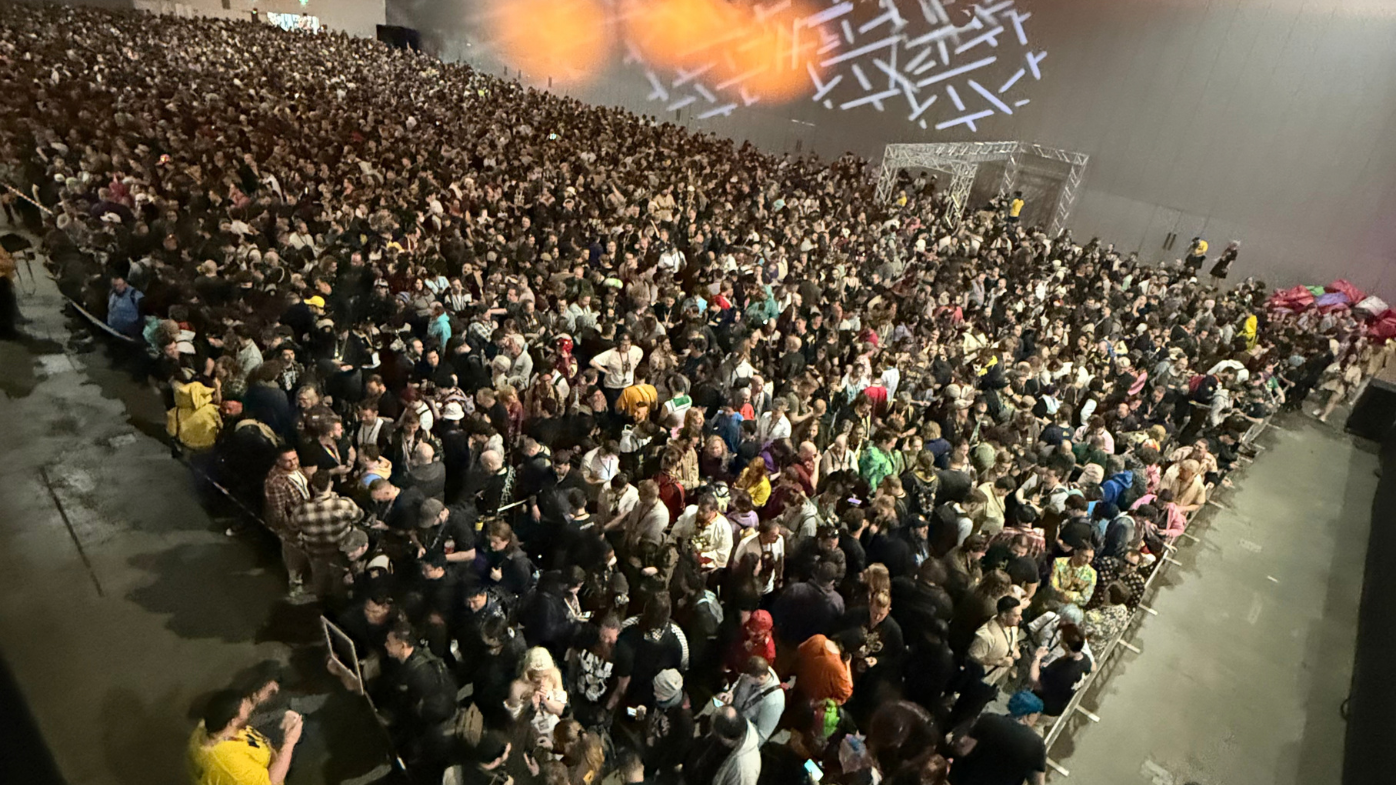
At PAX Aus 2026, I sat down with Owl Machine‘s Tex Barnes to discuss the game’s accessibility-first philosophy, why the team chose a pacifist approach to a traditionally aggressive genre, and how its distinctive hand-drawn art style came to life.
The game has great accesibility features and settings. I especially liked the no-spider mode! What considerations did the team make regarding accessibility during development?
Accessibility was there from the beginning, right from the design outset of the project. It’s something that’s really important to me as a developer.
READ MORE: Review | Key Fairy: ‘A Bullet Hell With A Gentle Soul’ (PC)
We really wanted to focus not just on one avenue of accessibility, but on a broad sweep of what research shows people need, and how we could approach that in a way that still suits the game while making it tailorable to people’s needs.
That’s one of the big principles of accessibility design. You want to have a lot of options so people can tweak things just enough that they’re getting the experience you’re designing, while ensuring it works with their experience level, capabilities and individual needs.

On the difficulty side, I found it a hard game, and being able to turn the difficulty dial was really important for me. I’m intrigued to know whether difficulty itself was important to the vision, or whether you wanted an experience that anyone could enjoy?
We wanted it to be difficult at its core because we wanted it to be a game about overcoming obstacles.
We were nominated for Excellence in Accessibility as well, which was something we were really pleased about because accessibility was so important to us. A lot of the other nominees were games that let players go entirely at their own pace. Key Fairy is a very fast-paced, frenetic action game.

But we wanted that experience of being a small creature overcoming obstacles to be accessible, even if someone can’t manage it at the speed the game normally runs. Not everyone has grown up playing twin-stick shooters, and not everyone can perform at that speed.
If you provide enough ways to control the game speed, add some health regeneration, or include other modifiers, then everyone can get essentially the same experience because it’s tailored to them. Even then, if someone simply can’t, or doesn’t want to, engage with that difficulty, I don’t think it’s reasonable to stop them from playing the game entirely.
No one has had a worse experience because we’ve included accessibility options.
There are definitely people who argue that you should gatekeep that experience because otherwise it somehow diminishes the accomplishments of people who complete it at full difficulty. But I don’t think it does.
Speaking of challenging gameplay, one aspect I loved about Key Fairy was the grappling hook mechanic. It took a bit of practice to master, but once it clicks it’s fantastic. Was that a foundational gameplay element?
It became one. It wasn’t in the original, original design, but it arrived pretty early.
Because we took away the ability to attack, we wanted movement itself to become a more complex interaction. The grappling hook creates a much higher skill ceiling for manoeuvring.
You can have a really fast, tricky and agile character, but you need to stay constantly engaged because otherwise you’ll just slam into a wall. We wanted it to feel a little bit like driving a car in a racing game.
READ MORE: Preview | Dungeon Pizza: The Cheesiest Game of PAX — And That’s a Good Thing
I’m also intrigued by the pacifist approach you’ve taken to what is traditionally quite a violent genre. Tell me about the decision to take on a genre that’s inherently intense and aggressive while approaching it from a much softer perspective?
I’ve always really liked action games and bullet hells, but I’ve never been particularly interested in bullet hells where you’re just holding down the attack button for five minutes straight.
I liked the idea that it could instead be a game about positioning and movement at speed. You also get a different kind of story when you’re playing a character who doesn’t stab or shoot anything. You’re just a creature trying to help people.
It was always intentional that you weren’t simply firing “love bullets” instead. You can’t just re-skin attacks and call it a pacifist game. You need a fundamentally different relationship with the mechanics. That’s why we made Key Fairy more reactive and defensive in the way it plays.
I found you needed to develop strategies and learn a more defensive playstyle. Each each boss took work to learn because they all approached their encounters differently.
We wanted every encounter to feel like its own unique little space. That evolved into the characters having their own dialogue, stories and personalities.
As you learn how to engage with each character mechanically, you also learn who they are. The reward is getting to talk to them afterwards and hearing their strange little tales.
I definitely enjoyed those tales. Each character gives you a little bit of context and information about themselves, but a lot is left up to the player to interpret and assemble in their own way. Was that intentional?
Absolutely! We really wanted everyone to come away with their own interpretation of the story. I have my own ideas about the overarching narrative, but I don’t think it’s a problem if somebody arrives at a completely different interpretation.
The game is more about small interactions between characters and building a little community than it is about enforcing one definitive narrative.

It was also incredibly funny. I’m not sure whether the comedy came more from you or Niosis (co-developer), but the humour really shines through.
I did the writing for the game — the game exists as a merger of the things we both enjoy. Niosis brings a lot of the darker fantasy elements, and I think those work really well when contrasted with humour.
I try not to have the characters, other than the Key Fairy, tell explicit jokes. They’re generally just saying things and existing in this strange little world. That contrast is what makes it funny.

READ MORE: Review | Allogloom: ‘A Gorgeously Gothic Glut’ (PC)
Speaking of Niosis’ contributions, Key Fairy is one of the most beautiful games I’ve ever played. Hand-drawn, the use of contrast, the mostly monochrome palette with those occasional pops of colour. Can you tell me how that visual concept came together?
The art is essentially the art Niosis has been drawing in the corners of notebooks her entire life.

It’s inspired by woodblock prints, old folklore illustrations and classic black-and-white fantasy artwork, including old Dungeons & Dragons illustrations that were monochrome largely because of printing limitations.

Everything else in the aesthetic grew out from there. Even elements that aren’t literally hand-drawn had to fit within that monochrome style. That meant learning how to use shading, dithering and other techniques to make things readable while maintaining that level of visual detail.
So what’s next? Key Fairy has obviously been a great success. Is there anything else in the pipeline?
There are a couple of things in the pipeline, but they’re secret — you’ll have to keep an eye out! If you follow Key Fairy on Steam or Discord, you might find out early. That’s all I can say for now.
Key Fairy is available now on PC via Steam.