Horror is a strange genre… From the outside, it looks like it’s all about scares and screams and people fleeing the cinema in fear. But when you’re immersed in horror culture, you start to pick up the nuances between slashers, jump scares, body horror, exploitation horror, and existential horror.
The Horror at Highrook is a horror game, but it falls more specifically into the camp of existential horror. It is a narrative-driven take on the genre—with a boardgame aesthetic—that asks, ‘How far will you go in search of answers?’

From board to screen
Board games are the clearest visual touchstone for playing The Horror at Highrook. The whole game takes place on one screen, akin to a game board. You take control of a team of paranormal investigators who go into an abandoned house to find out where the family has gone. It’s a journey of mystery, intrigue and Faustian bargains.
It’s within this singular map that you’ll spend time exploring the rooms, unlocking new ones, and poring over ancient texts and secret recordings. If you’ve played Cluedo or Betrayal at House on the Hill, you’ll feel right at home.
Where The Horror at Highrook differs from its board game influences is in its abundant narrative. With pages upon pages of lore, dialogue, and diaries to read, this game would be a nightmare to make physically.
Like so many horror books — think HP Lovecraft, Mary Shelley, Edgar Allen Poe — the writing here is terrific. As you spend time reading over lost diary entries, you get an insight into the father’s madness and understand the youthful innocence of the son through his misspellings and corrections. You also get a sense of the existential dread the family was experiencing as they dealt with the nonchalant, extraplanar entities and their disregard for human life.
While there is a Lovecraftian vibe to the game, there are also more modern inspirations. The demons you encounter feel very much like the Cenobites from Hellraiser, and the madness they inflict on characters feels akin to Event Horizon. Suffice to say, The Horror at Highrook is in good company.
READ MORE: Review | Synergy: ‘A New Twist On A Favourite Genre’ (PC)

Nuts and bolts (and tentacles)
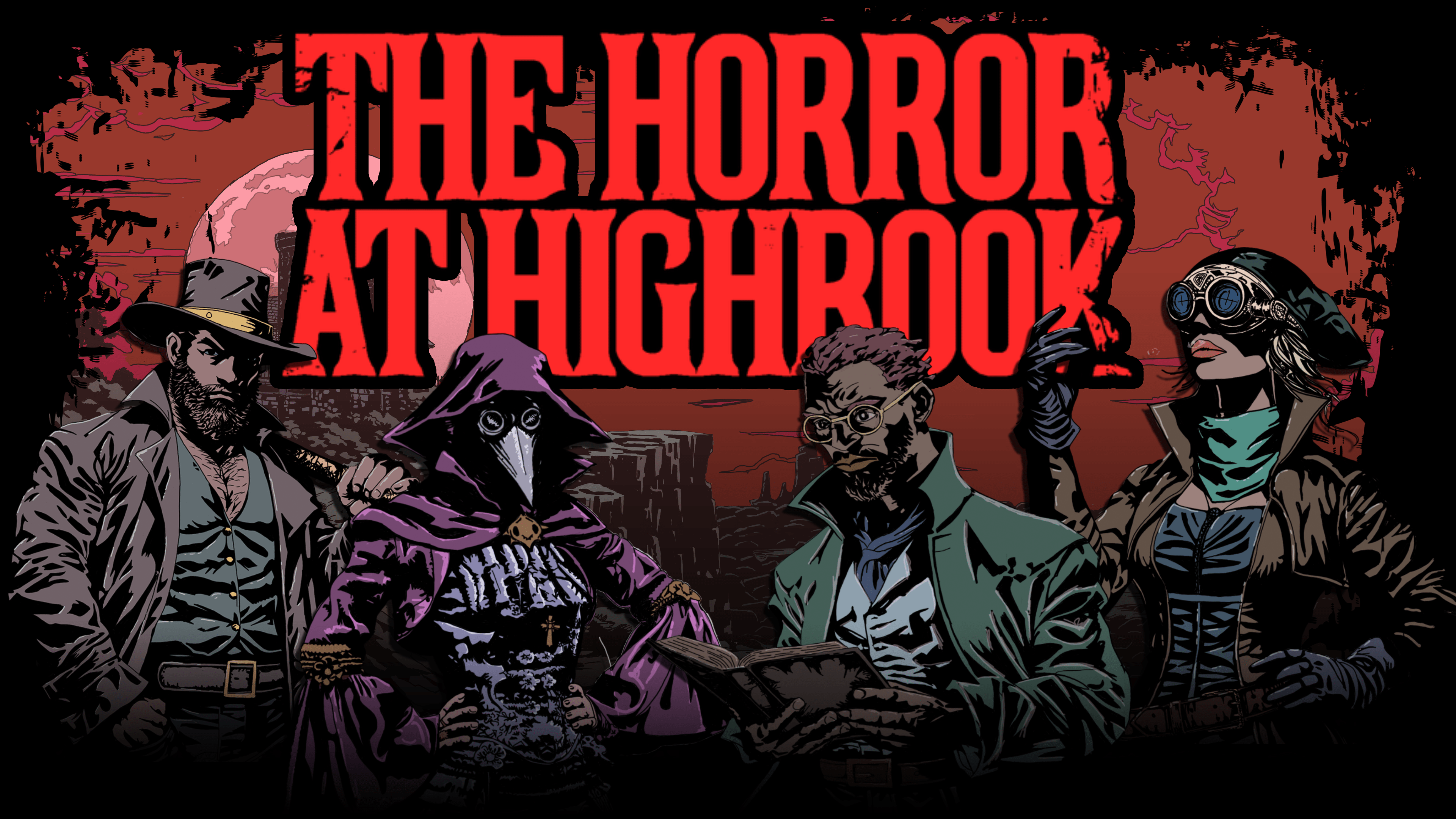
You have four investigators in your team: a doctor, scholar, mecanist, and thug. They each have their own set of skills, and you move them around the house to complete tasks suited to their role. For example, it makes sense to send the scholar to the library instead of the thug. You’ll spend a lot of your adventure juggling the needs of the investigators and collecting the items they require to complete their tasks.
With long chains of cause and effect, it feels like you’re pulling at the threads of the mystery and watching it all unravel before you. But when you lose track of what items you need to boost each investigators stats, and where to find them, it can become a bit of frustrating trial and error.
There was a point around chapter 3 where I lost the clear line of what to do next. I was collecting ritual cards for the next piece of the story, and despite sending characters to every room in the house, I couldn’t find additional pieces. Eventually, through sheer determination, I did find the next scrap, but it felt more like brute force than solving a mystery.

Reading between the lines
Some characters have overlapping skills that allow them to share roles. The Mecanist Astor and Doctor Caligar can both work in the laboratory, for instance. However, you’ll likely send the same people into repeat roles as you progress. For me, Atticus Hawk, the burly thug, did all of my hunting and exploring. While Scholar Vitali spent most of his time researching in the library and conducting arcane rituals.
Every character also has needs that must be balanced: injury, fatigue, madness and hunger. Long hours in the library will make a character tired and hungry, while witnessing ungodly acts of the occult will damage their sanity. You can rid them of their ailments by feeding them, letting them sleep or — in the case of madness — letting them drink moonshine…. Because that sounds like a great idea!.
Unfortunately, I accidentally left the time running while I went to make tea, and came back to find my four investigators all madly wandering around the map, sleep-deprived and hungry. It was a slow process to get them all back from the brink, but it was possible!
READ MORE: Hands-On With Mycopunk: The Fungal Shooter That Had Me Hooked

The slow burn
As you spend time on the trail of the Ackeron family, it becomes clear they have stepped into something far beyond mortal minds, and your team of investigators will have to follow in their footsteps to have a chance of saving them.
The story progresses through trying to find the lost family, following in their footsteps. It’s morbidly interesting to watch as some characters are drawn to the eldritch forces that corrupted Lord Ackeron, while others can see that path only leads to madness. As you uncover more about the family and their fate, it becomes clear that the people around them felt the same, as we see the groundskeeper intercepting and hiding the arcane instruments Lord Ackeron needed for his rituals. This is all told through diary entries, letters, dreams, and the visions of those who have crossed to the other side.
I loved that at certain story beats the characters didn’t see eye to eye, and there’s a bit of dissent within the group. Character objectives can press on these differences of opinion. Atticus for instance is the muscle, and he is superstitious as well. His sub-quests has him searching the house for a set of artifacts to loot that will fetch a pretty penny back home… Which doesn’t sit well with the more academic characters.

Going off-book
Towards the middle of the story, sub-quests start to pop up for each character, giving you a chance to learn more about your investigators and what drives them. Some even require characters to conduct research they aren’t skilled in. On one sub-quest, Doctor Caligar has to search the archives while following a scrap of paper. She has no skill in ‘memories’, so you have to augment her skills with items to complete the research.
Other extra characters and effects will pop up as the game progresses. Stokes The Raven will randomly appear and can help with ‘incantation’ and ‘roots’ activities. While Mr. Tubbs — a pudgy black cat — will wander aimlessly about the house, and can support ‘sleep’ and ‘cooking’ activities. However, Mr. Tubbs can’t be moved once he settles in a spot, which could block you from uncovering a secret hidden in an arcane tome… As a cat owner myself, I know that your cat getting in the way and refusing to move is the most cat thing ever.
READ MORE: Review | Clair Obscur: Expedition 33 (PlayStation 5)

Should I buy The Horror at Highrook?
The Horror at Highrook is an incredibly atmospheric game. It tells a compelling story using mechanics usually reserved for boardgames. It has fantastic art, and powerful writing chops. There are times when the path forward is unclear and the details repetitive, but they are few. It’s a short journey, at just 8-10 hours, but it’s a tumble down the rabbit hole that’ll stick in the back of your mind.
The Horror at Highrook won’t be for everyone, but I mean that in the best way possible. Because, for folks who love existential dread, a slow-burning story and incredible atmosphere, this is an easy recommendation.
Quest Daily scores The Horror at Highrook
8/10
The Horror at Highrook is coming to PC via Steam on May 2nd.
Quest Daily was supplied with an early review copy of The Horror at Highrook thanks to the publisher.