Digimon is a series that’s always been close to my heart. Whether it was the official movie released in the year 2000, with its killer soundtrack (you can’t go wrong with Ska) or the Dusk and Dawn Nintendo DS games, each generation had a shining, understated gem. Unfortunately, whereas its rival monster series, Pokémon, would only grow each generation, Digimon has become more of a cult-favourite franchise.
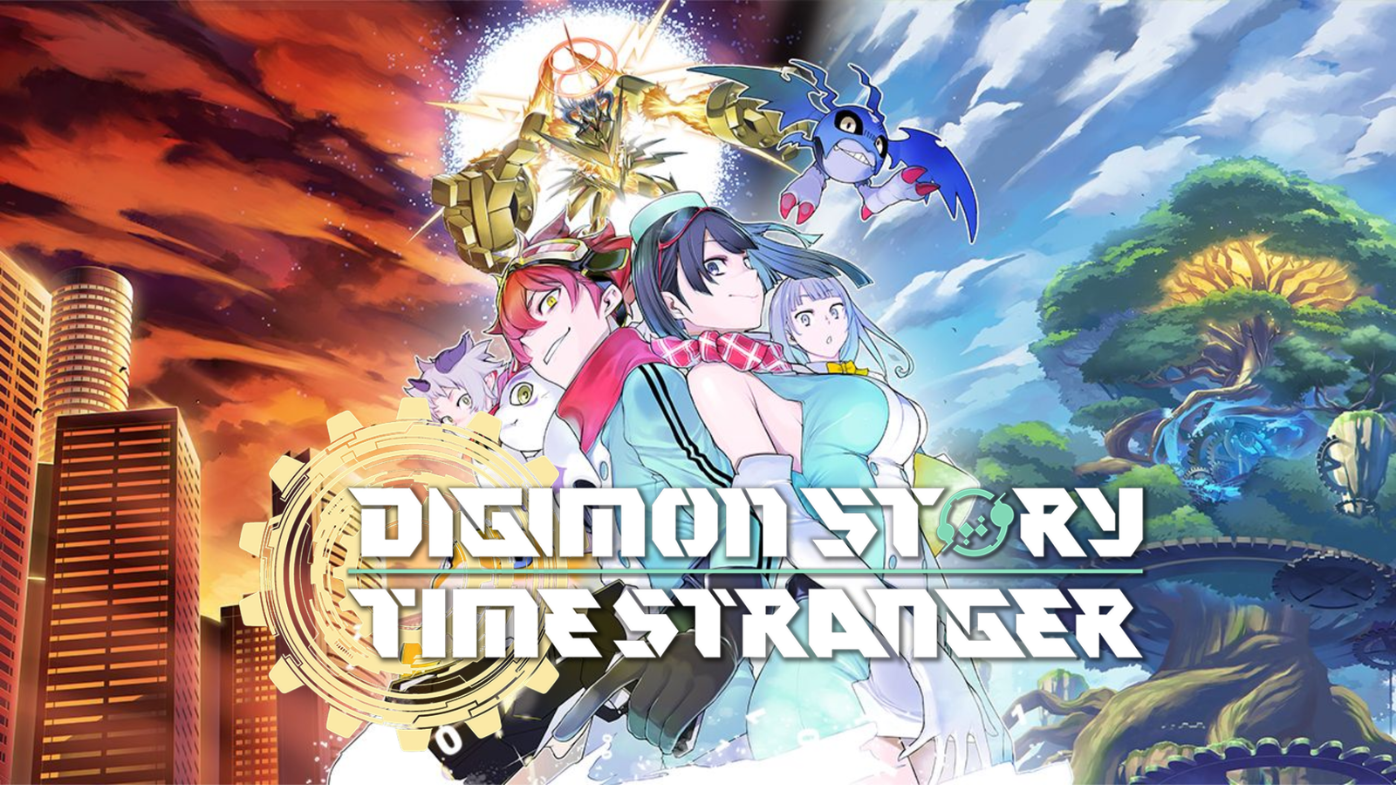
But maybe that could change, because Digimon Story: Time Stranger might just be the franchise’s biggest leap forward yet!
That’s right, Digimon Story: Time Stranger is finally out for the Nintendo Switch 2, which is odd because this game feels tailor-made for the console. The story goes that this title has been in development since 2017, and because dev kits for the Nintendo Switch 2 were limited, the developers couldn’t start optimising for the console until they had launched the game on other consoles first.
READ MORE: Final Fantasy VII Remake on Nintendo Switch 2: ‘Don’t Miss This Train’
These extra few months might have been for the best, as the game feels very polished. Docked or undocked, it ran smoothly with no complaints. But let’s not beat around the bush: Digimon Story: Time Stranger is far from demanding. Environments aren’t densely populated, the attack moves are rarely extravagant, and the cutscenes won’t really wow you. But that’s fine, because this isn’t that kind of game.
What this game is, is a fantastic bridge for new players to experience the Digimon franchise at its peak and lure prospective JRPG fans with an impressive spin on the genre.
A Quality Port For A Dated Looking Game

If you’re looking for a quick review, then Digimon Story: Time Stranger runs fairly well on the Nintendo Switch 2. With this console’s version of the game, you’ll get to choose between Quality Mode and Performance Mode. Given that the game is hardly the most technically taxing, I was able to let it run in Quality Mode both docked and undocked and never noticed any major performance issues.
That said, I found playing on Performance Mode and having a full 60 FPS at all times to be a far more enjoyable experience. In Quality Mode, I found that the game felt more sluggish. When moving, there was also a weird motion blur effect that made looking at certain environments fairly nauseating. This may come down to personal preference, but if the game is visually not landing with you, consider switching to performance mode, as that might make a world of difference.
Lighting Issues
Another issue I had with the game is that it has so many lighting problems, it’d make Christopher Nolan blush. On the starting screen, I adjusted the brightness up by one and was immediately met with a harsh, concentrated beam that engulfed my living room. The sun was so bright that it obscured an entire character interacting with me. I immediately went into the settings to turn it down, but the following sequence was set in a dark building, swarming with darker coloured enemy Digimon. It was too easy to stumble into a fight without seeing them blending into the walls or the floor colour, which was more frustrating than difficult.
Unfortunately, this was a recurring issue with the many darker environments in the game. Toggling brightness and changing to performance mode would be a temporary solution, but once my character left whatever dungeon they were in, it was right back to Gandalf arriving at Helm’s Deep.

While the original release had reports of bugs and visual glitches, including Digimon disappearing and crashes tied to outfit changes, I didn’t personally encounter these issues during my time with the Switch 2 version. In fact, aside from those visual issues, the game ran nearly perfectly. Load screens were rapid, saving was quick, and combat never lagged or had noticeable frame drops.
So, if you were worried about any residual bugs that may not have been patched, I think the devs have managed to catch most of these for this new release.
Another Refresh For The Digimon Franchise

If you were holding out for the Nintendo Switch port before picking up the game, let me give you a quick rundown of the game and its story.
This game places you as an ADAMIS agent, a special government task force responsible for the handling of Digimon. After experiencing an apocalyptic event where a futuristic Tokyo is besieged by a mysterious Digimon, you’re suddenly thrown back in time, eight years earlier. Now, your mission is to investigate who the mysterious figures associated with the event are and, hopefully, prevent it from ever happening.
I want to preface this and say I really enjoyed this game, but its opening is a major slog. You start out investigating rumours of tremors happening near Shikoku, Japan, which has prompted the local government to shut down all roads and transport. This naturally causes the public to protest, meaning we now have to sneak in to do some digging. We don’t have to wait long before we learn that a bunch of dangerous Digimon are attacking the area, leading to a clunky chase sequence with a MetalGreymon.


This also leads to a giant Kaiju suddenly appearing out of thin air and destroying the town. Eventually, you end up on the roof of a building and, after a brief fight, are teleported through time to a mysterious magical chamber. However, it isn’t long until we’re once again transported eight years into the past after yet another vague encounter. It’s a lot to throw at a new player, with rapidly mounting stakes that are tough to keep track of. I had to take a long walk after finishing this sequence as my head started to hurt.
READ MORE: Review | Dragon Quest VII Reimagined: ‘A Classic Remade With Care’ (PS5)
Thankfully, the game picks up steam quickly and can reset its pacing to something a bit slower and more digestible. What especially helped me was realising that this opening is almost exactly the same as Final Fantasy X, and that’s my favourite game of all time, so I respect the developers for “knowing ball”, as they might say.
The story also picks up here and becomes quite entertaining, if not predictable. But a nice kind of predictability where you’re able to enjoy the ride as you play through it.
We Sure Hope You Like Collecting Monsters

Digimon Story: Time Stranger is a deceptively simple game once you get the hang of it. If you’re a Pokemon fan, you’re likely scratching your head over why thunder-type spells are resisted by Digimon that look mighty weak to lightning. That’s because, instead of elemental weakness, Digimon weaknesses are determined by species instead. Thankfully, the game will tell you when something will resist or deal bonus damage after trying once, so you rarely have to keep an encyclopedia inside your head tracking all of them.
This game also has one of my favourite features in a JRPG: the ability to switch the game speed up to 5x, sprinting through battles. Which you’ll want to do, as dungeons are swarming with encounters, and you’ll want to fight all of them, as grinding experience is a core feature of the game. This is also made simple, as standing still after a fight will quickly regenerate your Digimon’s health and skill points, meaning you don’t need to chug 20 potions and ethers to make it through a single dungeon.
READ MORE: Review | Star Fox: ‘Downright Awesome’ (NS2)
Digivolution
Digivolution remains a core part of the game as well. After battling a certain type of Digimon enough times, you’ll eventually be able to convert your data to turn them into a member of your party. As you keep levelling it up and talking with it to change it’s personality type, you’ll be able to Digivolve it into a new, stronger kind of Digimon. Eventually, you will hit a brick wall where you’ll need to upgrade your Agent Level to let certain Digimon evolve, but also a stat threshold.

Unlike in Pokémon, you can actually un-evolve your Digimon, letting them permanently retain some of their stats. The idea here is that you’ll go between hitting a level cap with your Digimon, de-digivolving them to boost their stats once more, hitting the level cap again, and upgrading to their even more powerful form. It’s admittedly far grindier than regular Pokémon, but given the quality-of-life fixes the game has made here, it’s hardly a slog, in my opinion.
Should you play Digimon Story: Time Stranger on Switch 2?

Digimon Story: Time Stranger is a fantastic entry in the series, and it feels like it’s found its right home on the Nintendo Switch 2. Getting to take the game along with you on public transport to kill time between longer commutes, while also shaving time off your Digivolving grind, is a welcome return.
While the story doesn’t start out as anything particularly revolutionary, it eventually turns into an exciting, time-hopping adventure. It’ll also throw you a few gut punches along the way to make sure you’re still capable of feeling something, turning the slow-burn of the early game into a heartfelt payoff.
Aside from a few minor issues with this port’s performance mode and glaring lighting issues stemming from the game’s somewhat outdated design, I think this is the most fun I’ve had with a Digimon game in years. If you’ve ever been curious about the franchise and are wondering where to start, I can’t think of a better choice than this.
Quest Daily Scores Digimon Story: Time Stranger (Nintendo Switch 2):
8/10
Digimon Story: Time Stranger releases on the Nintendo Switch 2 July 10th, and you can pick it up via the Nintendo eShop.
A review copy of Digimon Story: Time Stranger was supplied to Quest Daily for the purpose of this review.