There’s no mistaking that we’ve been spoiled by excellent remakes in recent years. While others may have taken creative liberties in the name of modernising its experience, I believe Dragon Quest VII Reimagined has struck the perfect balance of refining its core while maintaining its retro charm.
Admittedly, I haven’t played the original Dragon Quest VII nor its 3DS remake released in 2016. Such an admission is enough to render someone’s “JRPG fan” card invalid in most spaces. That said, having played several modern JRPGs and recent remakes, it’s clear that the team at Square Enix has gone to great lengths to ensure this rendition of Dragon Quest VII stacks up against other modern peers. And, like the recently released Final Fantasy Tactics: Ivalice Chronicles from last year, it does so without compromising the original game’s identity.
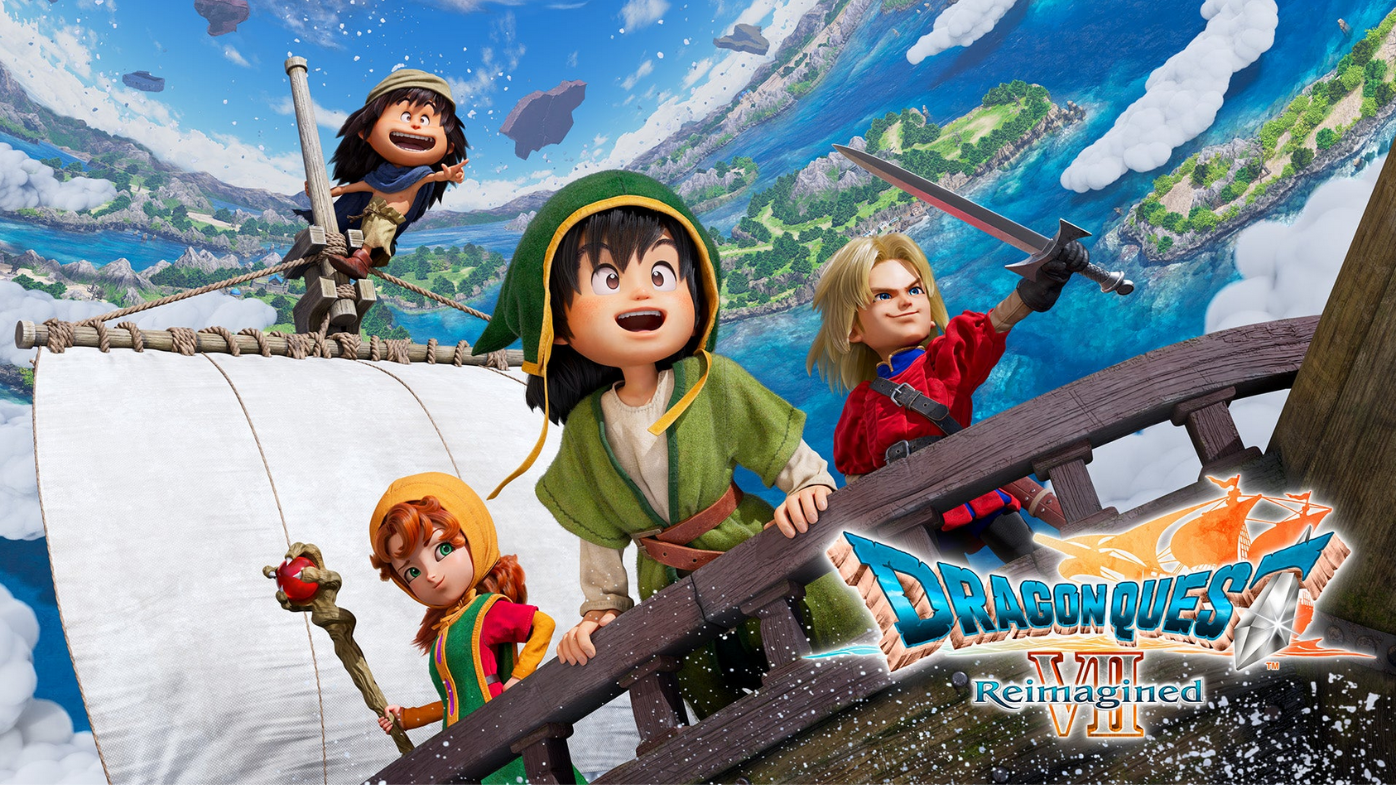
Dragon Quest VII Reimagined feels like the perfect remake any fan could ask for. You’ve got highly requested quality-of-life features, added story moments that expand on potential loose plot threads from the original, and an impressive graphics update that preserves the charm of Akira Toriyama’s original designs. Whether you’re a die-hard fan hoping to recapture the first time you played the game, or a newcomer looking to make this your first entry into the Dragon Quest franchise, you’re sure to be in for a great time.

A Streamlined Experience
Ahead of Dragon Quest VII‘s release, publisher Square Enix made it very clear in its marketing that the remake would significantly streamline its 100-hour story. Lead scenario writer Sayaka Takagi would later tell Game Informer that their development team had cut story moments that didn’t make sense and rewritten entire scenarios to offer new story moments for returning fans. “What we did was we started with the overview of the plot – the shorter version of the entire scenario of Dragon Quest VII – and laid out some ideas of what we could do to make the story more interesting,” said Takagi, adding that the developer team did it all while respecting and honouring the original.
In the original Dragon Quest VII, it would take around three to four hours for the average player to reach their first combat encounter. In the remake, it took me around an hour. I was surprised to learn it took that long, as I still felt I was treading water at the beginning, really pushing myself to make it past its slow opener. However, once the game finally got going, it maintained the momentum and kept me engaged throughout, eager to travel to the next island to see what the next story had in store.
But it’s not just the story that’s been streamlined in this remake; much of its gameplay has been as well. Now, while hearing that can raise some alarm bells, I’d argue many of these changes help to modernise Dragon Quest VII to match other JRPG’s out there.
READ MORE: Review | Like a Dragon: Infinite Wealth ‘Goofy, Heartfelt And Exciting’ (PlayStation 5)
For example, like in the Persona series, you can now one-shot enemies in the overworld if you’re strong enough without having to enter a combat encounter, shaving some time in the dungeon. Another addition that I love is that if you’re facing multiple of the same enemies, they’ll swarm attack you instead, sparing you from having to watch the same attack animation repeat multiple times in a row.

Unlike in previous Dragon Quest games, items are also shared across all characters. So, now you won’t have to worry about making sure each character has enough medicinal herbs mid-fight, or if the character with your sole Yggdrasil Seed goes down, you won’t be out of luck to revive a downed party member.
Clear User Interface and Accessibility
Another area worth praising is that Dragon Quest VII Reimagined has one of the finest UI experiences I’ve seen in a JRPG. So much of character customisation can immediately be accessed from the main menu, letting you quickly change gear or vocations on the fly without losing yourself in several different sub-categories of menus.
You’ll also be able to tweak your gameplay experience seamlessly also. If you find yourself stumbling into a dungeon that has a surprising skill check, you can simply tweak the enemy damage to be lower so you can make your way through it. Another setting choice also lets you toggle whether your party heals after every combat encounter, which can be a neat feature considering some of the dungeons in the game can stretch for a long while.
A major criticism of JRPGs is how grindy they can be. So, the developers have kindly added options that let players optimise how quickly or slowly they progress while levelling. If you hit a wall and need to grind, you can increase experience gains, lower enemy damage, and take on whatever enemies you can to earn those much-needed levels. Or, if you want a tougher challenge, you can opt to lower the experience you receive when doing an underlevelled run.

It’s decisions like this that I think really demonstrate that the team behind this remake looked at the fanbase’s major pain points with the original game. They found solutions that keep the challenge for veterans who want it, while also offering solutions for newcomers so they don’t feel overwhelmed with needing to grind out extra levels.
A Story Reimagined

As mentioned earlier, there have been some tweaks to the story to help condense the experience. I can’t necessarily comment on whether or not these changes are for the better. Though, getting through the first hour of the game was admittedly a bit of a slog. The best comparison I can put forward is that it felt like playing Pokémon before you get Poké Balls and running shoes.
From my admittedly biased perspective — having not seen greener pastures — shaving time off the opening to get players onto their first real adventure feels like the right move.
But this isn’t the only dramatic change the game has in store for returning players. Dragon Quest VII now offers new endings for the different stories you’ll encounter on the islands. These come into play during the very first island you visit, where choosing who you give a key item to can radically change the story’s outcome. Given that Dragon Quest VII is receiving its third iteration, I think this is a neat spin that will breathe even more life into the game and make the experience feel fresh to returning players.
READ MORE: Review | Octopath Traveller 0: ‘Two Steps Forward, One Step Back’ (NS1)
This element made me feel more connected to the themes each story conveyed, and knowing that my choices mattered made me pay more attention to the interactions between characters. This even prompted me to talk to as many NPCs as I could to gather as many context clues available so I’d feel more informed about the choices I was making. Not all of the solutions necessarily needed this, but it definitely added to my appreciation of the game’s worldbuilding.
A Remake Done Right

I’m completely sold that team behind this remake were passionate about the original Dragon Quest VII, and set out to recreate a faithful remake — Square Enix absolutely succeeded in its mission here. Outside of some minor pacing issues and occasionally jarring characterisation (Maribel, you will not see the light of heaven), there isn’t much I disliked about the remake. The aspects that fell short for me were holdovers from the original, and the team clearly went to great lengths to improve them so they wouldn’t be as grating.
But thanks to the fantastic combat system, refined story, and gorgeous art style, all I’m left with are mostly nitpicks. I genuinely believe you couldn’t ask for a better remake of a classic title, and can only hope Square Enix looks to the blueprint they’ve laid out here for other remakes in the future.
Quest Daily scores Dragon Quest VII Reimagined:
9/10
Dragon Quest VII Reimagined releases February 5, and you can pick it up on the PlayStation, Xbox Series S | X, Nintendo Switch and PC via Steam.
A review copy of Dragon Quest VII Reimagined was supplied to Quest Daily for the purpose of this review.