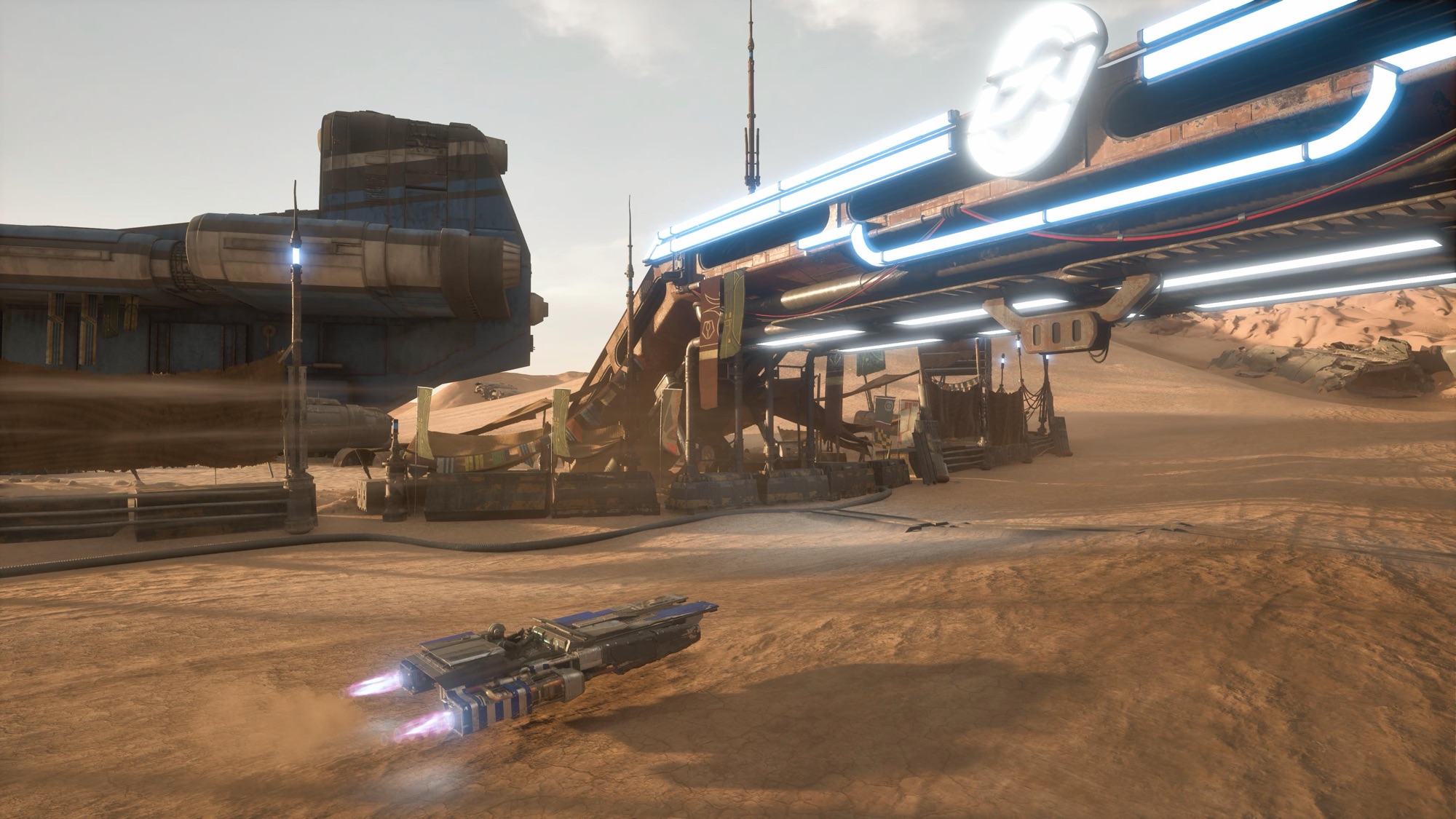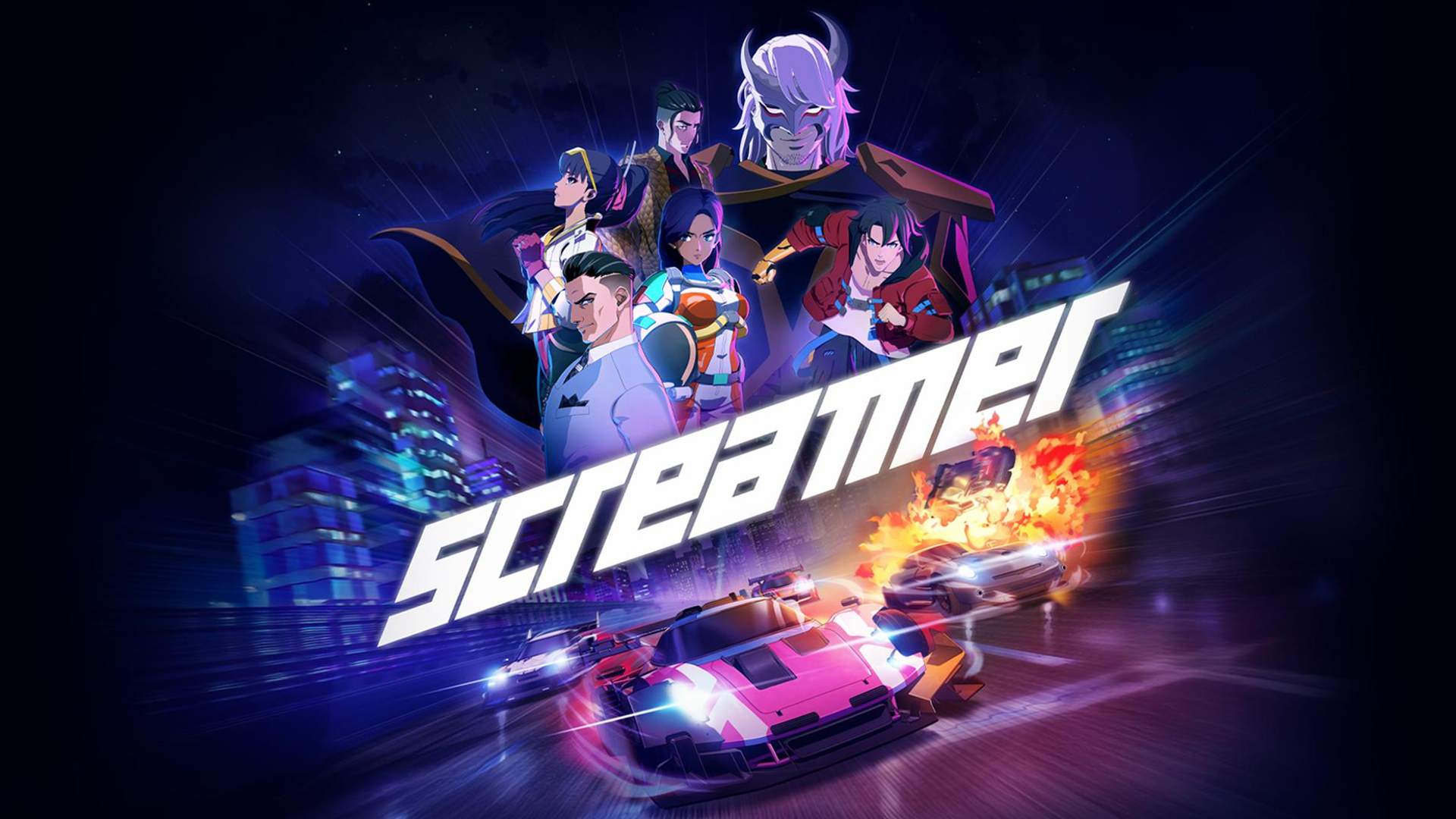
There’s little shared DNA between Screamer and the 90s racers that once carried the same name. This isn’t a revival, nor a nostalgic throwback. Instead, Screamer is a bold reimagining — a fast, tactical combat racer with surprisingly deep systems, wrapped in a cyberpunk anime aesthetic.
Screamer pulls inspiration from all over, but it never feels derivative. It is loud, demanding, and compelling in its own right.
More Than Just Left, Right, Go
Arcade racers usually pride themselves on simplicity: accelerate, steer, maybe brake… Perhaps a drift button or even a power-up if they are feeling wild.
Screamer is not so simple. In fact, the first thing it asks you to do is unlearn how to steer. It isn’t a single input — instead, the game adopts a novel twin-stick scheme. The left stick handles conventional steering, while the right stick independently controls the angle of your drift.
READ MORE: QD Rapid Review | Primal Planet: ‘Clever Girl’ (NS2)

It takes a little time to recalibrate your brain, but once it clicks, it is deeply satisfying and gives you unusual control over how you throw the car into corners. It also feels remarkably good at speed — which is fortunate because Screamer is very, very fast.
READ MORE: Preview | Yuma Nest: ‘Gorgeous But Grindy’ (PC)
Echo, Strikes and Overdrive
The twin-stick steering is merely the appetiser to Screamer’s five-course systems banquet.
At Screamer’s racing core is Echo — a resource loop governed by two interlinked meters: Sync and Entropy.
Sync is your defence — generated through maintaining speed and via perfectly timed “active shifts,” and you spend it on speed boosts or shields.

Spend Sync, and you build Entropy, which you can cash in for a strike — a violent high-speed attack that turns your car into a missile, capable of KO-ing rivals on impact.
The two are inextricably connected: boosts generate Entropy, spending Entropy on successful KOs generates Sync, and the loop starts again. Further, if you fill the Entropy meter you unlock Overdrive, the most valuable state in the game — essentially Screamer’s take on Mario Kart’s Star, combining a huge speed boost with instant KOs on contact.
Echo is a clever system and it provides tactical depth — but it takes practice. Perfectly timed shifts are the fastest way to generate Sync, but they come at you very fast. Knockouts are the best way to re-generate sync, but executing one takes precision — mistime it, and you’re rebuilding Sync the hard way. Overdrive mode isn’t invincibility, either — slam the wall too hard and you KO yourself.

READ MORE: Review | iRacing Arcade: ‘Pocket-Sized Racing Joy’ (PC)
Team races push the strategy further, with victory being determined by team score. Finishing position matters, but KOs also award points, forcing you to choose between focusing on clean track position or hunting opponents.
When Complexity Trips the Fun
As refreshing as Echo is, it isn’t frictionless. Sync generation leans heavily on clean shifts. You can leave the transmission to auto, but you will barely generate Sync, leaving you uncompetitive.
In practice, this means a lot of attention is on the rhythm of shifting rather than racing. Not the most… Engaging way to race. In a game where drifting feels so fantastic, it was a shame to have drifting not really feed the Echo loop.

However, there is one character named Hina whose special ability lets you generate a boost from drifting — and it’s a delight. It allows you to sit back and focus on what makes racing fun.
Still, when everything clicks, Screamer feels phenomenal. The pace is ferocious, but the handling flows.
Racing With Purpose
Screamer’s career mode offers five teams, each made up of three drivers, competing in a brutal championship run by the mysterious Mr. A.
The Echo system is woven directly into the fiction as the technology that lets these drivers weaponise their cars.

READ MORE: QD Rapid Review | Marathon: ‘Wonderfully Detailed, Punishingly Fun’ (PS5)
The structure is episodic — a clear overarching chronology with a storyline for each team that you are free to progress at your own pace.
Episodes typically pair short visual novel scenes with a race or driving challenge. The pacing is brisk enough that you are never stuck in dialogue for too long, and anime lovers will enjoy the frequent fully animated cutscenes, too.

READ MORE: Review | Legacy of Kain: Defiance Remastered: ‘Fate Refined, Not Rewritten’ (PS5)
The story itself is strong. Dialogue is sharp, performances are confident, and characters are given space to develop into meaningful arcs.
Arcade mode offers plenty of variety, too: standard races, team events, duels, time attack, checkpoint runs, and more. You can customise rule sets extensively, toggling boosts, KOs, and assists to tailor how much chaos you want.
An Anime-flavoured Visual Feast
Visually, Screamer is striking. It blends anime-style art with a more grounded physical world, then layers on bold, high-contrast comic-book effects for boosts, KOs and Strikes.

The aesthetic leans into dystopian cyberpunk — neon-lit cityscapes and gritty futurism — but there’s welcome variety across environments. Car designs are distinctive, too, with a clear JDM inspiration and an intentional disregard for subtlety.

Is Screamer worth your time?
Screamer is not an easy game. It demands finesse, patience, and mastery over a system that over-complicates the pure joy of driving.
But at its core is a phenomenal racer with tatical combat systems and a presentation bursting with confidence. I applaud Screamer for having mechanical ambition and the courage to be different.
Quest Daily scores Screamer:
8/10
Screamer is available on March 26th for PlayStation 5, Xbox Series X, and PC.
A review copy of Screamer was supplied to Quest Daily for the purpose of this review.