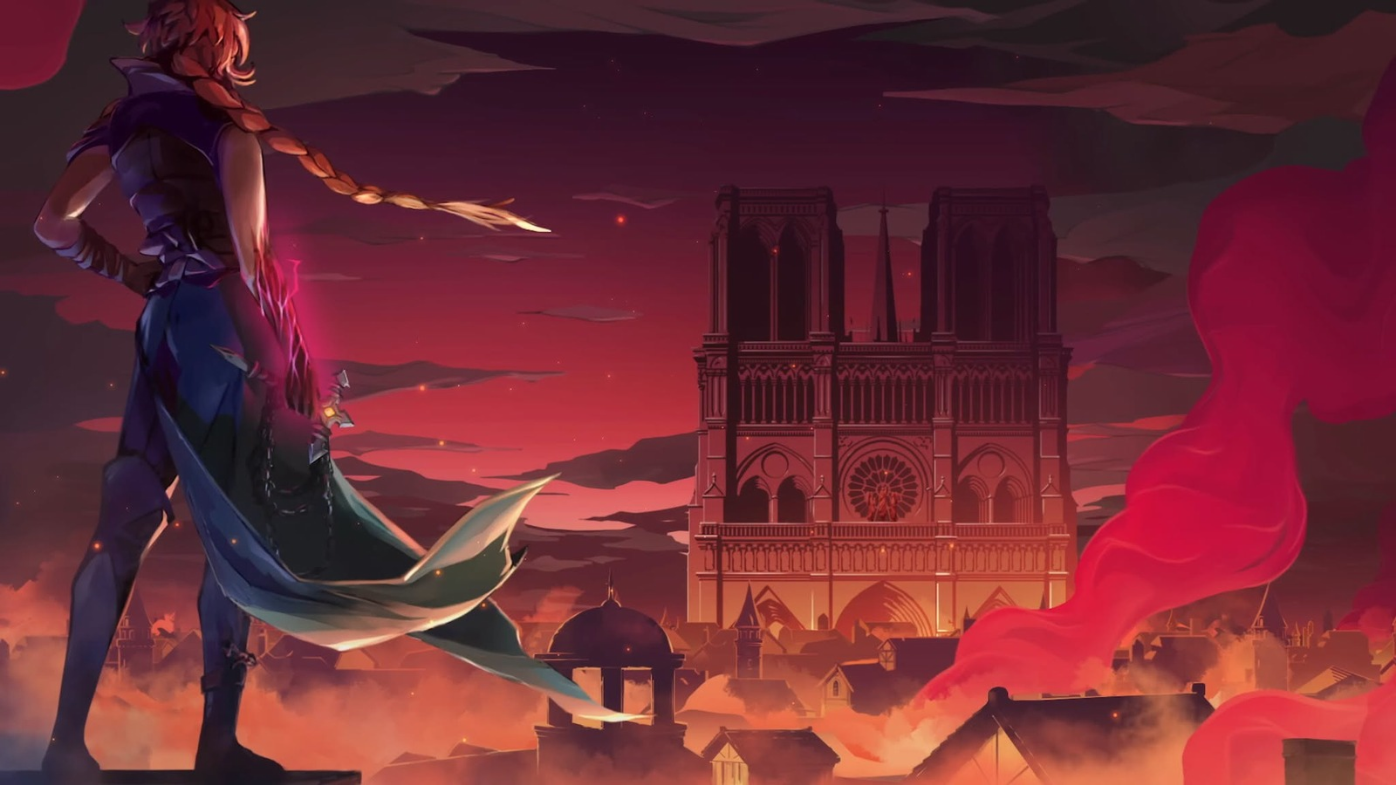
I’m not going to beat around the bush, Metaphor: ReFantazio is my game of the year. Atlus and Studio Zero have taken the best bits of the Persona series and somehow made them work within a medieval fantasy setting. But it’s no mere Persona ‘holiday special’. The new IP enhances and evolves the formula, becoming a shining example of how to do JRPGs right. When it comes to my games, I value story and character above all else, and Metaphor delivers that in spades.
Democracy Manifest

Political unrest, corruption, crippling poverty, racism, inequality – this is the backdrop for new RPG Metaphor: ReFantazio. Although the game is set within a fantasy world full of monsters, magic, and different humanoid species, it mirrors the current state of our own world.
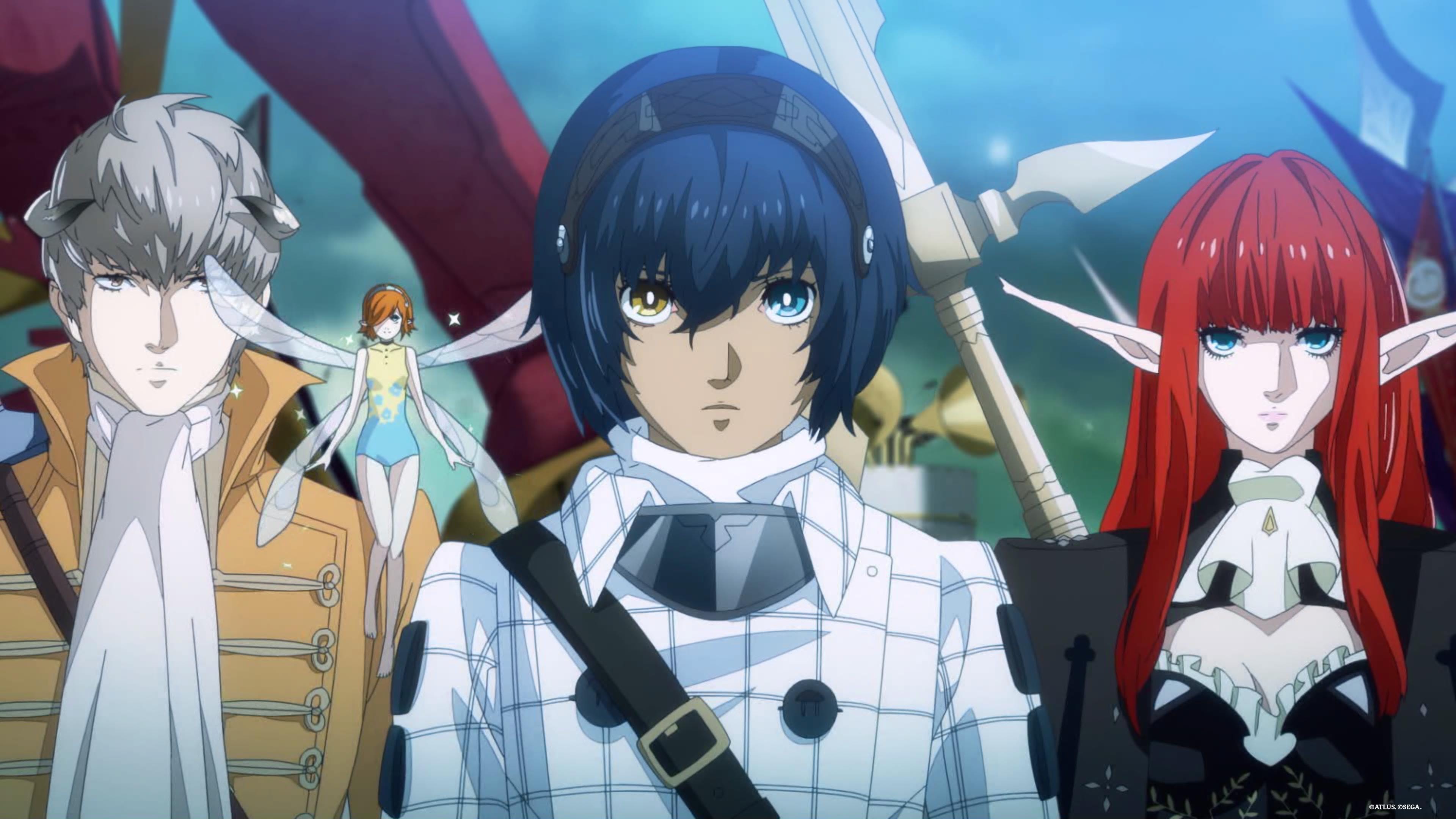
In the United Kingdom of Euchronia, there are nine tribes of people, each with their own physical traits and standings within the kingdom. The Clemar, identified by the pair of horns on their head, and the Roussainte, with their long elf-like ears, are the most populous of the tribes and have the highest societal status.
On the opposite end of society, you have the Paripus, whose furry ears and tails give them a bestail appearance, and the Eugief, a diminutive tribe with bat-like ears and wings. These tribes face constant racism and discrimination and are often found on the streets barely surviving.
None, however, are more shunned and hated than the Elda; their tribe was denounced and massacred by the church, becoming so few that most have never met an Elda in person.
READ MORE: Katsura Hashino’s Metaphor: ReFantazio | A Bold New Chapter in Fantasy RPGs

The game kicks off in bloody fashion, with the cold and merciless assassination of the king. The murder, at the hands of the military general Louis, sparks the events that shape the game’s story.
Before reading on, just a quick warning that there are some early game spoilers further down – all featured in the game’s demo.
We now follow the ‘Insert-name-here’ protagonist, a young man of the Elda tribe, I named my character Dante. Joined by the fairy Gallica, the pair infiltrate the kingdom’s military to deliver a message to the hidden operative Grius. It’s here that we meet Strohl, an idealistic Clemar noble, and are dispatched to reinforce a distant outpost.

Upon arrival, they find the outpost under attack by a human, an oversized grotesque monstrosity. It’s during the fight with this miscreation that the protagonist awakens the power of the Archetypes, a dormant power activated by intense emotion and power of will.
The party meets up with Grius, and their new mission becomes clear, kill Louis Guiabern. However, their task isn’t born out of revenge for the king, but instead intended to save his son the prince, who was attacked by Louis over a decade ago. The attack didn’t kill the prince but left him incapacitated under an unliftable curse. His supporters spirited him into hiding and told the kingdom he had died.

On the road to the king’s funeral, where they intend to take their shot at Louis, Strohl and Grius also awaken to the archetypes, thanks to their connection with the protagonist.
On the day of the funeral, the processions are crashed by Louis, who all but declares himself the new monarch. However, the palace rips out of the ground and rises to the heavens, with the voice of the dead King Hythlodaeus V bellowing a declaration out across the land. With his death, the king’s magic has activated, kicking off a contest for the crown. Literally anyone can enter, regardless of tribe or social status, and whosoever has the majority vote in four months’ time will become the new king. It’s a literal game of thrones!
READ MORE: Review | Stellar Blade (PlayStation 5)

Grius decides to follow through with their assassination plot, but is stopped in his tracks by the king’s magic — which protects the most popular political candidates from being attacked — and Grius has his throat mercilessly slit by Louis. With their plan foiled, the protagonist decides to enter the royal race for himself and find a way to kill Louis, lifting the curse from the true heir to the throne.
What follows is a story full of drama, tension, and political maneuvering that tackles some pretty deep and dark issues such as racism and slavery. On multiple occasions, there were narrative twists that absolutely blindsided me and emotional character moments that had me wiping away tears. As it’s a story that should be experienced as spoiler free as possible, I won’t go into further detail, but I was left wholly satisfied with the way the events of the game unfolded.
Constituents

As good as the story is, it’s the characters that make the game special. There’s over a dozen followers for you to spend time and connect with, helping them come to terms with their often tragic backstories.
I felt quite protective over Grius’ daughter Maria, partly from guilt over her father’s death, but also because she is around the same age as my real-life daughter. She was the one follower I would always drop everything for, to go and help with her problems. When travelling the world, the party would occasionally come across an awe-inspiring natural wonder and stop to take in the sight. Gauntlet-runner pilot Neuras, handy with a pencil, would draw sketches of each spectacle, and I always made sure to bring them back to Maria so she could experience the world outside of the capital.
READ MORE: Review | Visions of Mana (PS5)

My most loyal companion was Leon Strohl da Haliaetus, the young Clemar man from a noble house, ever trying his best to live up to the example set by his parents. He was only a boy when his entire village was destroyed by a rampaging human, and he has since vowed to protect the weak and seek revenge for his fallen family.
My fondness for Strohl is driven in no small part by the stand-out performance of actor Stewart Clarke. The character had barely opened his mouth before my ears pricked up, recognising his voice from his superb performance as Dion Lesage in Final Fantasy XVI. It also helped that Strohl was an absolute beast on the battlefield, dishing out punishing physical attacks to complement my protagonist’s array of spells.
The voice acting throughout the entire game is excellent, with a selection of accents from across the real United Kingdom. Neuras has a posh English accent and a fondness of using the word ‘bally’ in place of swear words, which is so very British. Louis’ right-hand men, Del and Bas, have thick Scouse accents, which felt like the perfect fit for the streetwise Paripus brothers.
The protagonist, voiced by Caleb Yen, has an American accent, which instantly makes him feel like an outsider in a sea of U.K. accents; appropriate for one of the few surviving Elda.
Not all dialogue in the game is voiced. You’ll need to get your reading glasses out for a fair portion of the character interactions. But the most important, impactful moments are fully voiced.
READ MORE: Review | The Plucky Squire (PC)
By-election

One of the most interesting things about Metaphor: ReFantazio is its political backdrop and how that colours the rest of the game. In the race for the throne, you’ll be competing against rival candidates and performing good deeds to curry favour with citizens. As your achievements become more well known, random people will be gossiping about you on the street, for better or for worse.
As soon as the tournament begins, Sanctifex Forden and Lord Louis have an almost insurmountable head start in popularity. No one else is even close. Such a lead would be expected of Forden, the head of the Sanctist Church, the dominant religion in the kingdom comes with its own built-in fanatical fanbase.

More interesting is how popular Louis is with the people, even after being widely suspected of murdering the prince a decade ago, and more recently all but admitting to murdering the king himself. Louis is promising to break the wheel and offer people a new world where all tribes are equal. It shows how disillusioned the lower tribes are with the current regime, that they are willing to ignore the terrible things Louis has done, for the chance of a better life.
It’s part of what makes Louis such a good villain, he’s charismatic and charming, with policies that sound like they would actually make the world a better place… However, as always, the devil is in the details. Where his supporters view his utopia as a place where they can live a life free from oppressive racism, Louis instead would have a world where the only measure of value is strength, leaving the weak, elderly and enfeebled to fend for themselves.

Similar to Louis, the protagonist is running on the promise of tribal equality, vowing to help absolutely anyone who needs helping. That might be something small, like fetching a magical toothbrush for a man with crippling toothache or something more serious, like investigating a fallen-knight accused of kidnapping kids and holding them hostage in a pit of sandworms!
Along your journey, you’ll pick up companions of different tribes, a fact not unnoticed by the people of Euchronia, lending weight to your promise of equality.
READ MORE: Review | Star Wars Outlaws (PlayStation 5)

There’s also a swathe of smaller candidates vying for the throne. Rudolf wants to establish a military dictatorship with the Roussainte tribe in power, Edeni is advocating for religious freedom, while Lina has seemingly only entered to promote her family business! Goddard wants to tax the young to bankroll the elderly, while Roger wants to abolish taxes altogether.
You’ll find campaign posters pasted around towns, each one emblazoned with the policies of its respective candidate. Do enough for a region, and you just might find your own poster on the wall! My favourite candidate was Loveless O’Shea, the third son of a tavern owner. He’s a bit of a frat boy, running on the promise of free booze for the people. His slogan: “A bar on every block and a flagon in every hand!“

When travelling around the world, you may find other candidates blocking your path with their gauntlet runners. Usually, you’ll have to fight, and force them to move. Sometimes, they might become a new ally or even drop out of the race entirely.
In each town there’s a podium where you can make speeches to the townsfolk and try and win them over. Often, the podium is already occupied by another candidate, and you’ll have the option of engaging them in debate. Coming out on top will earn you votes as well as some extra campaign funding.
I don’t think I’ve played a game that utilises politics, specifically an election, in such a big way before, but it fits perfectly within the story that Metaphor is telling.
Campaign Bus

For a candidate to have any real shot at the throne, they’ll need to travel around the country and drum up support. For that, they’ll require a gauntlet runner, a large vehicle that travels across the land at high speed on giant legs, scavenged from slain monsters.
The protagonist is given use of the gauntlet runner built specifically for the prince himself, which serves as a base of operations for the group. Built and piloted by Neuras, the runner feels like a character in its own right.

On board, you have plenty of options of how to utilise your time when travelling between destinations. Reading books or spending time with allies will raise your royal virtues and sometimes even deepen your connection with that person.
Cleaning will raise your max HP slightly, while doing laundry will raise your max MP. I even got an increase to my luck stat just for going to the toilet! You can also soak in the bath to increase your base stats and cook meals in the kitchen to create consumables with all sorts of positive battle effects.
Campaign Song

Within Metaphor: ReFantazio, music is one of the oldest forms of magic, and that rings true for the game’s soundtrack. The enchanting orchestration is dominated by bold brassy notes, symphonic strings, and dramatic drums. Accompanying the instrumentals is an otherworldly choir and rhythmic chanting — in a language I can’t quite place — that vibes so hard.
The battle themes are particularly special, the grandiosity of the choir making every fight feel like an epic duel to the death… Even if you’re just smacking the plaque out of some decaying tooth monsters.
The score perfectly frames the epic narrative, an invisible hand reaching up through your headphones, dragging you to the United Kingdom of Euchronia.
Here’s hoping the OST drops onto streaming services at the same time the game releases.
Running on Persona’s Ticket?

With veteran Persona director Katsura Hashino at the helm, it’s clear that Metaphor: ReFantazio inherits a lot of DNA from its predecessors. While it does feel like a fantasy Persona game, it doesn’t feel like a spin-off, but the next step forward.
Visuals

The cel shaded art style, flashy animation, and exquisite anime cutscenes that made Persona 5 so stunning, return for Metaphor. Some of the character art in particular wouldn’t be out of place in a Persona game, with the protagonist bearing a striking resemblance to Makoto Yuki from Persona 3 Reload.
READ MORE: Review | Astro Bot ‘Bloody Spectacular’ (PlayStation 5)

The disturbingly twisted human monstrosities serve as some of the game’s toughest bosses and reminded me of the Persona 5 palace boss Asmodeus in a big way. Many of the humans are directly inspired by the painting ‘The Garden of Earthly Delights’ by medieval painter Hieronymus Bosch.
The fantasy setting, with its medieval townships, numerous sentient species, and mix of magic and machinery has allowed the developers to differentiate Metaphor from the modern Tokyo Persona games.
Calendar

The calendar system is back and better than ever. There’s still two opportunities a day — morning and night — to develop relationships, run errands, earn coin, and increase your attributes. You can also take on dungeons to complete side quests and take down bounties, but these activities will take up the full day, if not more, depending on travel time.
Playing Persona 5 I was never really comfortable with the calendar system, I always felt that there were way too many things to do with my time, and too few days to pack it all in. It could be anxiety inducing, to say the least.
Metaphor: ReFantazio never pushed me to the brink of frustration like P5 did. Each deadline in the game seemed to be given just the right amount of days needed to complete the main objective, side quests, and extra time for other activities. By the end of the game, I had comfortably maxed out all of my follower relationships and completed every quest.
Relationships

Building strong relationships with your comrades is such a core element in the Persona series, and that carries across to Metaphor too. Taking the time to experience characters’ stories and help them with their issues is the best part of the game.
In Metaphor, each of your followers is linked to a specific archetype. Growing your connection with a person will enhance their archetype, with a high-level bond needed to unlock the more powerful variations. For example, Hulkenberg is tied to the Knight archetype. You can unlock the Magic Knight through regular progression, but to unlock the Paladin, you’ll need to develop your bond with her.

Increasing relationship levels can also unlock some pretty amazing passive bonuses. A deeper bond with Gallica brings more detail when scanning a dungeon, Brigitta will put in a good word with her merchant friends to give you a better discount from shops, while Catherina pulls some strings to get you better bounty rewards.
In Persona, it could often take multiple visits to a character before their confidant rank increased. In Metaphor, my follower relationship ranked up whenever I spent time with them. Though, that doesn’t mean you can just hang out with one character back to back until they’re maxed out; you can only meet with them when they are ready, which might depend on the time of day, the main story progression, your royal virtues, or whether you’re in a city or traveling.
Oh, and maxing out your relationship with a character won’t unlock any romance options in Metaphor… Sorry.
Virtues

Royal virtues function similarly to social stats in Persona, needed to advance the relationships with your followers. There are five in total: courage, wisdom, tolerance, eloquence, and imagination. If your virtues are too low, you won’t be able to come up with the right words to convince a follower to open up to you.
You can increase your virtues in countless ways. Listening to the problems of a downtrodden citizen can improve your tolerance, while taking part in a debate will boost your eloquence, even simply sitting on a park bench to enjoy the view can bring added wisdom.
The rate at which you gain virtue points increases dramatically later in the game, so don’t worry too much about the slow progression of each virtue.
Dungeons

The main dungeons in Metaphor take inspiration from the palaces in Persona, with multiple levels to explore, loot to find, and safe rooms to take a breather and save your game.
While the deadline to complete a dungeon may be weeks away, you need to be cautious about leaving things too late, as dungeons can often take two or three trips to fully complete.
Within the dungeons, there are no places to replenish your mana, so you’ll need to rely on items for that. As most attacks, spells, and abilities require it, you can quickly deplete your reserves if you aren’t careful; without mana you’ll struggle against the tougher enemies.
Restorative items are few and far between, so conserving your mana supply is of utmost importance, and it ends up dictating how far through a dungeon you can get in one day.

Every tavern has a peddler of information that you can purchase all sorts of intel from. For a few coins, you can get the low down on a dungeon, detailing what sorts of enemies you can expect and what they’re weak against. It’s an invaluable resource for planning your assault, especially in the early to mid game.
Weather plays a big part in planning which dungeons you should tackle and when. Bad weather causes the monsters inside a dungeon to be especially ferocious, with the advantages you usually get from striking a foe’s weak points nullified. Defeating these tougher enemies nets you increased rewards, so it’s up to you whether the risk is worth it or not.

Sometimes, within a dungeon you’ll come across a giant gem called a melancholia crystal. These spawn endless enemies and are the perfect place to grind for experience, money, etc. But destroying the crystal itself will stop the flow of monsters.
In one of the later dungeons, I came across a crystal that spawned weak moth-like enemies that had a high chance of dropping magla potions. It felt like hitting the lottery of mana restoration, so I had no choice but to farm 99 of those suckers.
Dungeons have relatively straightforward designs and aren’t as extravagant as the palaces in Persona 5, which are designed to be over-the-top and excessive. Not to say Metaphor doesn’t have its fair share of wacky ideas, at one point my party was swallowed by a colossal sandworm and I had to fight my way through its insides to find the ‘exit’… Its butt, it was its butt.
Combat

Turn-based fans will be happy to hear that the much loved battle system returns once more, with a heavy emphasis on identifying and exploiting your enemies’ weaknesses. You can get extra turns for hitting monsters where it hurts or stop a multi-action assault in its tracks when you dodge or block an attack. It goes both ways, though, with enemies given the same opportunities.
If the RNG gods aren’t smiling on your fight or you’ve made a few dumb mistakes, instead of throwing your controller and screaming into a cushion, you can ‘turn back the clock’ and retry the encounter.

Instead of collecting and calling on personas to aid you in battle, you’ll be using the power of archetypes, which work more like jobs than summons. Each archetype has its own attacks, magic, and abilities, as well as its own unique weapon type. As long as they meet the requirements, any character can equip any archetype, so you can run with a full squad of berserkers or knights if you desire.
Synthesis attacks are a cool new option that see you joining forces with one of your ally’s archetypes to deliver a devastating strike. What attacks you have available to choose from depends on what archetypes you have in your active party, which gives the player a gentle push into trying new combinations. Synthesis uses up two turn icons and costs MP from both party members, but the results are usually worth it.
READ MORE: Review | Starfield: Shattered Space DLC (Xbox Series X)

In addition to turn-based battles, there’s also the option to attack monsters as you run around the dungeon. Weaker enemies can be dispatched in one or two hits, saving you massive amounts of time by avoiding a full-on battle. While the weaker enemies can’t draw you into a turn-based battle, they can still deal damage to the protagonist, and if that HP hits zero, then it’s game over.
Stronger enemies can be stunned, especially from a sneak attack, which gives you the upper hand in the ensuing turn-based battle. The stun advantage is so good that sometimes, if I messed up and the enemy ambushed me instead, I would run from the battle and have a second go at getting the stun!
Akademia

There’s even a mysterious other worldly place called Akademia, which you initially visit in your dreams similar to Persona 5. While the mysterious room is styled as a grand library rather than a prison, it still gives off major Velvet Room vibes. It’s here that you study and manage your archetypes much like you would personas.
The team at Studio Zero have taken the core elements that make Persona so beloved and evolved them, implementing enough new ideas (and a cracking fantasy story) that the game is able to stand on its own two feet.
A Landslide Victory?

While I am absolutely glowing on Metaphor: ReFantazio, like any game, it’s not perfect. That said, any issues I had were pretty minor in the grand scheme of things.
Some of the smaller dungeon types are very straightforward and can become repetitive. It wasn’t a huge issue for me personally, as most of the time I just wanted to get back to the story or build bonds with my followers anyway.
Facial animations and lip sync could be better, though sync is a notoriously hard thing to get right when developing for multiple languages. The voice cast does such an amazing job bringing the characters to life, that the simple facial animations become a minor issue.
READ MORE: Why Persona 3 Reload Should Be Your First JRPG

I would love it if the battle results screen could be skipped to get back to gameplay faster. When you’re battling your way through multiple encounters in a row, it can feel like it’s bogging down the pace of the game.
At certain points during the game, your popularity ranking can’t go below a particular number. While that makes sense from a story perspective — you can’t have a random nobody rise in rank TOO quickly — it was still a little disheartening as a player. The tasks, bounties, and side quests I was completing all felt a little less fulfilling when there wasn’t an accompanying rise in popularity.
I also had some frame rate issues here and there, but they were very minor to my eyes, and on the whole, the game ran really well for me.
Should I Buy Metaphor: ReFantazio?
In short, yes. Metaphor: ReFantazio is, without a doubt, one of the best games to come out this year, and is currently sitting on the throne as my game of the year.

Metaphor takes the tried and true formula of the Persona series and evolves it to become more than the sum of its parts. Wrapped in an all new IP, it tells a mature story set within a fantastical world. Memorable characters with emotional backstories are the backbone of the game; you’ll share in their struggles and emerge on the other side stronger for it.
With a unique integration of politics, an outstanding voice cast, and an absolute symphony for a soundtrack; Metaphor: ReFantazio is something special.
If you’re a fan of the Persona series, this is an absolute must play. If you’re a fan of JRPGs, this is an absolute must play. I won’t go as far as saying it’s an absolute must play for EVERYONE, as I can see how turn-based battles and a chunky 100-hour playtime might be a deterrent to some players.
If you’re unsure, there’s a free demo available to try, with your progress carrying over to the main game. What do you have to lose!?
Quest Daily scores Metaphor: ReFantazio
10/10
Metaphor: ReFantazio releases on October 11th for the PS4, PS5, Xbox Series X|S, and PC.
A copy of Metaphor: Refantazio was supplied to Quest Daily for the purpose of this review.