They say you can’t go back — but when you’ve tangled with time, the future never comes without strings.
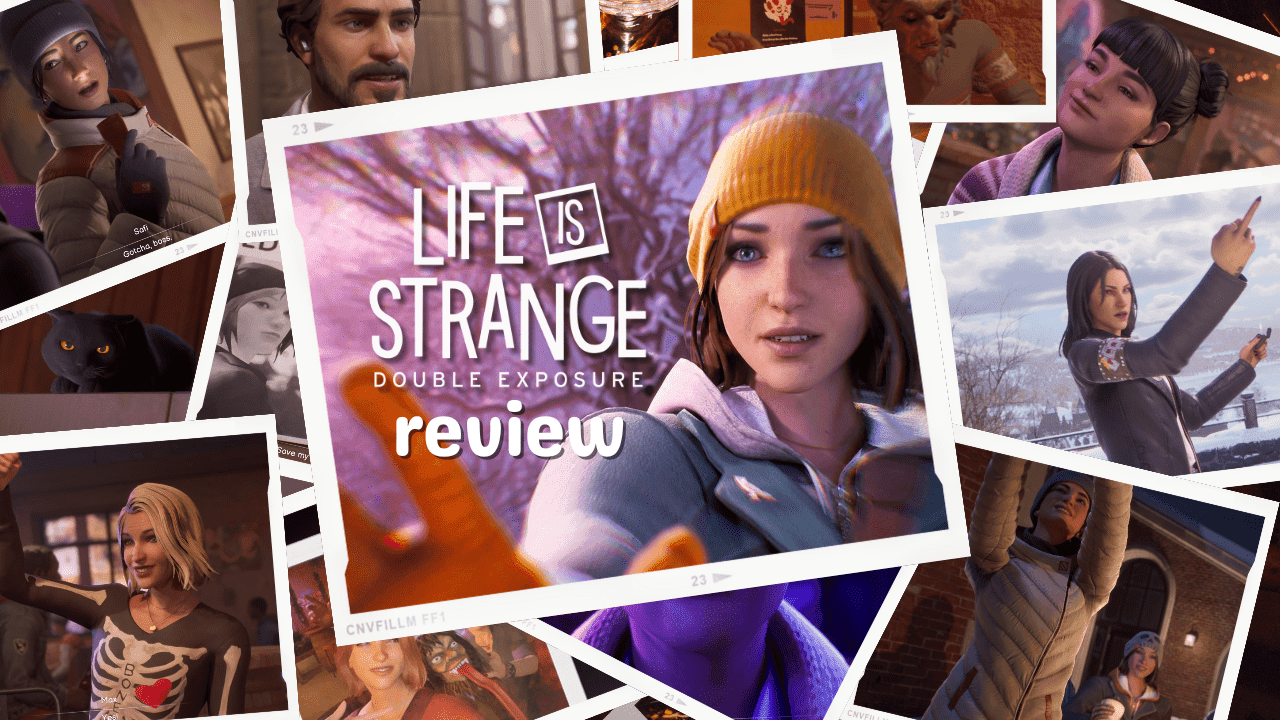
Life Is Strange: Double Exposure is an episodic adventure developed by Deck Nine Games and published by Square Enix — it’s also one of my favourite games I’ve played this year. As the fifth instalment in the series, it directly continues the storyline of the first Life Is Strange, originally developed by DON’T NOD.
Set ten years after the life-altering events in Arcadia Bay, Life Is Strange: Double Exposure puts players back into the shoes of Max Caulfield. Much has changed since those stormy days — Max has achieved her dream of becoming a professional photographer and is now a guest lecturer at Caledon University in Lakeport, Vermont. But everything changes when her friend Safi is found murdered, pulling Max into a mystery tangled across fractured realities.
Max Caulfield’s Return to Centre Stage

As someone who graduated high school the same year as the original game’s release, returning to Max’s world felt like reconnecting with an old friend. Max’s quirky humour and love for dad jokes remain, though there are subtle changes that reflect a decade of growth.
Hannah Telle shines in her portrayal of an older, more confident Max while still capturing her intrinsic shyness. Her nuanced performance especially stands out in scenes of grief, where hints of the original Max surface.

Despite her new life, Max can’t escape her past entirely. When Safi notices a photo of Chloe in her wallet, it brings back the defining choice from the first game: Did you save Arcadia Bay, or did you save Chloe Price? While this decision impacts a few minor aspects of the game, it doesn’t drastically alter the story. Still, it’s a bold move by the developers, acknowledging the gravity of the original ending rather than ignoring it.
READ MORE: Review | Some Goodbyes We Made (PC)
Max’s New Time-Twisting Powers

Max’s heightened emotions unlock a new ability to shift between two timelines: one where Safi is gone and another where she’s still alive. Each timeline holds subtle differences. In one, grief lingers on campus, while the other moves forward toward final exams and a fresh start.
‘Shift’ allows Max to cross between realities at specific weakened points in time. Orange lights take her to the ‘alive’ timeline, while blue ones return her to the ‘dead’ timeline. These temporal anchors give Max a foothold as she explores her fractured realities.

‘Temporal Pulse’ offers quick glimpses into the other timeline, providing useful insights without fully shifting realities. These powers alone open up plenty of supernatural sleuthing opportunities.
Since each timeline can alter the tone of relationships, a thoughtless word or action can have significant repercussions. Fortunately, Life Is Strange: Double Exposure provides a helpful UI overlay to indicate which timeline you’re in.
READ MORE: Review | Shin chan: Shiro and the Coal Town (PC)

While players can take their own pictures, I was disappointed that the game pre-frames them in ways that limit creativity. Allowing players to craft their own images from scratch would have been more rewarding, ensuring a personal touch to the experience.
‘Pricefield’ & Echoes of Arcadia

The writers of Double Exposure skillfully weave subtle nods to the original Life is Strange, creating a sense of déjà vu for longtime fans. Max feels authentically herself, with maturity reflecting her journey. She’s now a young professional, embracing her identity and growing rather than being defined by trauma. The distance from Arcadia Bay, and Chloe, seems to have allowed Max to heal. Whether she’s accepted Chloe’s passing or the end of their relationship, this separation has given her space to become a confident, successful woman.
While some fans voiced strong reactions online to the decision to keep Max and Chloe apart despite choices made in the original game, this progression doesn’t feel dismissive. It reflects a natural evolution, where Max’s growth means standing on her own. Once I let go of initial disappointment, I quickly grew to appreciate the fresh relationships and dynamics that reflect that.

Notably, there are several nods to Max’s life back in Arcadia Bay. While the storm’s impact was significant, Arcadia Bay wasn’t entirely destroyed, so familiar names and faces still pop up through ‘Crosstalk’, giving players a few heartwarming, and sometimes bittersweet, updates on characters from Max’s past.
READ MORE: Review | Fruitbus (PC)
Growing Attached to the New Faces of Caldeon

At Caledon University, Max is surrounded by new friends, colleagues, and students. Drawn into constantly questioning those around her, I found myself as captivated by the unfolding mystery. Every time I thought I had pieced it together, a chapter’s end would shatter my assumptions and reveal new depths to the characters. This ever-present suspense kept me hooked, eagerly awaiting each new revelation.
Several standout elements in Double Exposure heavily impacted my emotional investment. From a technical perspective, the game’s character animations and facial expressions represent a huge leap forward. Comparing Max’s movements and visual style in the original Life is Strange (2015) to those in Double Exposure is like night and day. Even compared to True Colors (2021), there is a noticeable improvement. Motion capture brings every subtle gesture and facial expression to life, creating believable feelings and interactions.

The use of social media in the form of Crosstalk, and a messaging app, gives us a glimpse into characters’ lives beyond the main storyline. Adding relatability, humour, and even suspicion as you do a little bit of social media stalking.

After only just meeting Safi and forming a connection with her in the first scene, deciding whether Max was already crushing on a completely new character in the next felt a bit premature, especially while still adjusting to a Max without Chloe. However, this hesitation softened as the story progressed.
Read More: Review | The Smurfs: Dreams (PS5)

The cat storyline is a charming, lighthearted respite from the game’s weightier themes. While not central to the plot, it adds a comforting distraction for both Max and the player. It’s a shame that this delightful addition is locked behind the Ultimate Edition.
Outfit Customisation

The ability to customise Max’s outfits in Life Is Strange: Double Exposure was a fun surprise. My favourites were the Halloween-themed options, exclusive to the Deluxe and Ultimate editions. However, I found it odd that indoor and outdoor outfits are chosen separately and don’t always align, causing jarring shifts in Max’s hair colour, or make-up.
READ MORE: Just Dance 2025 Edition: Should You Buy It?
Accessibility & Performance

The game offers a suite of accessibility options that ensure players can fully immerse themselves in the story. From extended choice timers to tailored trigger warnings, the game supports a wide range of needs, marking it as one of the most inclusive menus I’ve seen in a narrative-heavy game.
Initially, Life Is Strange: Double Exposure was the glitchiest instalment in the series, with visual oddities like doors appearing open when they were closed, occasional audio misalignments, and texture issues. After the two-week early access release, updates addressed many of these. While minor glitches appeared early on, the game’s immersive visuals, refined motion capture, and atmospheric soundscape effectively transport players into Max’s world.
Final Reflections

With a slow-paced, explorative, and reflective approach, where I tried to interact with everything before I moved forward; It took me 20 hours to complete Life Is Strange: Double Exposure. Regardless of my efforts, I didn’t 100% the game. However, I could happily dip into a second playthrough to fill the gaps.
Double Exposure reopens Max Caulfield’s journey with fresh mysteries, new powers, and an expanded universe, blending nostalgia with deeper choices that set the stage for future chapters. It balances nostalgia with fresh growth. Offering longtime fans and newcomers alike a rewarding, thoughtful journey that captures the free spirit of the original while exploring mature perspectives on grief, growth, and the impact of choice. Max’s new journey kept me fully engaged and entertained from start to finish.
The game seeds multiple paths forward for Max’s journey to evolve, and hope to be back in the chunky Doc Martens of Max again soon.
Quest Daily scores Life Is Strange: Double Exposure:
9/10
Life is Strange: Double Exposure is available on PlayStation 5, Xbox Series X|S and PC via Steam.
A copy of Life Is Strange: Double Exposure was supplied to Quest Daily for the purpose of this review.