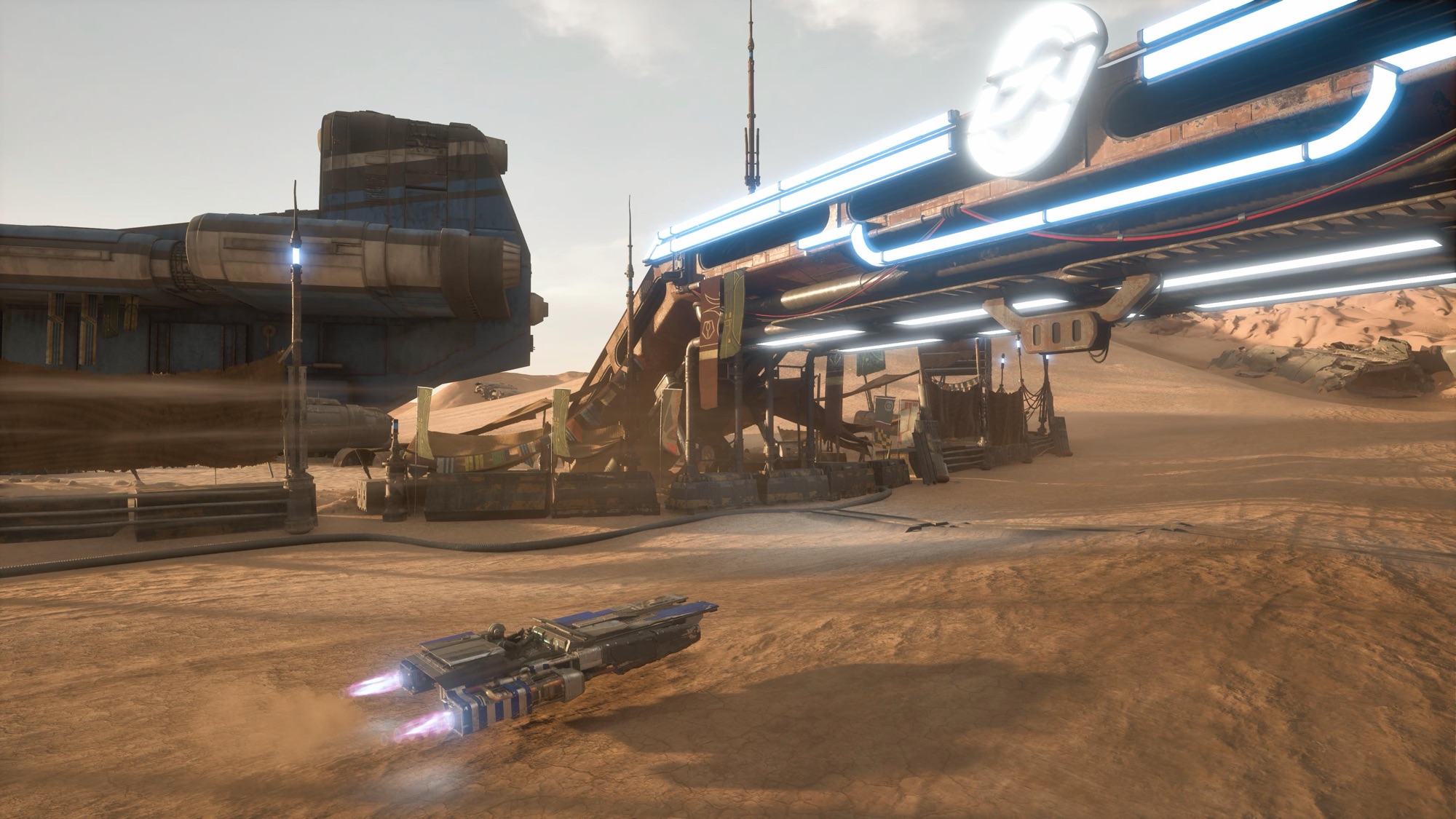
SAROS has some of the best third-person shooting in video games. Movement is sublime as you explore a hostile alien planet, packed with relentless combat encounters that barely give you time to breathe. The bullet-hell boss battles have you on the edge of your seat — hands white-knuckling on your controller — right up until the last shot is fired.
But much like the game’s constantly looming eclipse, there were parts of SAROS that left me stranded in the dark, desperately trying to find my way.
Planet Carcosa

After a new mineral worth TRILLIONS is found on an alien planet, capitalism ensues and numerous expeditions are sent to extract it. All of which have since gone radio silent.
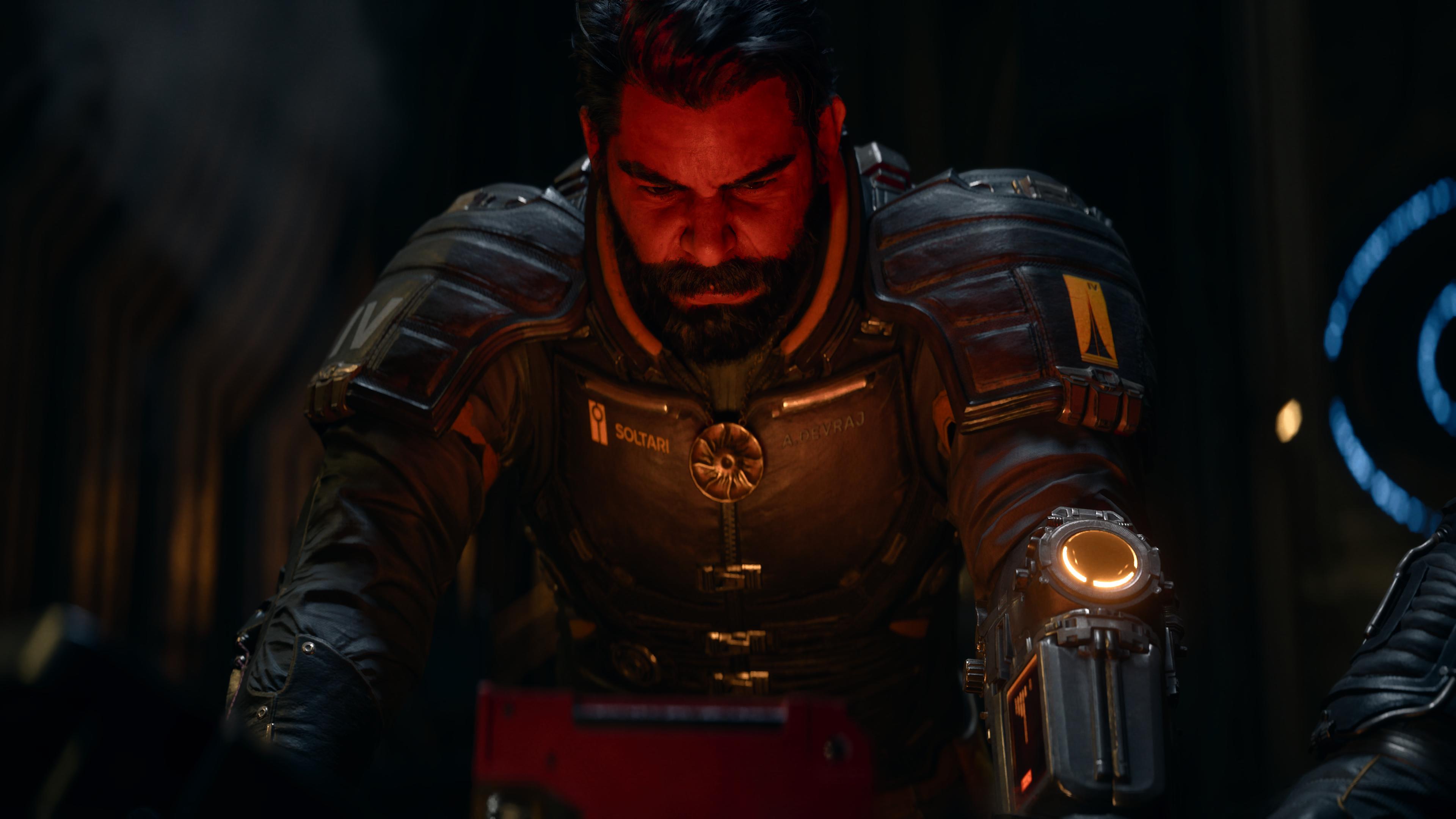
Arjun Devaraj is an enforcer working for the Soltari corporation and part of the fourth expedition to planet Carcosa. Tasked with finding the lost colonists — and more importantly, securing the source of the mineral — Arjun explores the hostile alien world, battling the monstrosities that block his path. However Arjun has his own goals and will stop at nothing to achieve them.

The rest of the story is slowly revealed in psychologically violent fragments — like something out of a Lars von Trier movie — but even after finishing the game I felt like I had more questions than answers. Much of the lore is told through notes and audio-logs, but it can be a sea of random names at times. With four expeditions worth of colonists, most of which you never meet, finding where the snippets of lore fit into the larger puzzle is… puzzling.
Returnal also had a confusing plot, but it worked because we were with Selene as she crash-landed on an alien planet for the first time, leaving us just as confused as she was in our search for a way to escape. In SAROS I felt like I was dropped into the MIDDLE of the story, and spent the next 20 hours on the back foot.

While actor Rahul Kohli does his best to bring Arjun to life, the writing just fell flat for me, and the dialogue felt clunky and awkward. Facial animations and lip sync are also pretty poor, which is a bit of a rarity from a first-party PlayStation game. I also just didn’t care about any of these characters; none of them seemed like particularly good people, and besides Arjun, you don’t get to know any of them that well.
READ MORE: Review | Pragmata: ‘To The Moon’ (PS5)
Shoot, Die, Repeat

SAROS is a hard game — a draw for some and a deal-breaker for others. There are no difficulty options, but there is more to help you along the way than Returnal offered. Some players will be relieved to see a couple of helpful accessibility settings, such as aim assist options and customisable bullet colours.
Each run has you traversing through an alien landscape, blasting baddies, finding better weapons, and equipping artefacts to temporarily enhance your armour. Sometimes there will be mini-bosses to defeat or devices to activate before you can reach the level boss. If you die, you revive back at your base and will need to re-run it from the start, though the way the level is arranged shifts and changes each time. During your run you’ll eventually hit a wall, needing to activate the eclipse to advance, which makes enemies tougher and some projectiles inflict corruption on you, limiting your max health.

As you progress through the game, you unlock various sites that you can teleport to from your base, meaning when you die, you don’t need to run through all previous levels to get back to where you were.
There are resources to collect on your runs that can unlock nodes on a skill tree; stuff like stat bumps, more effective healing items, or increasing your weapon proficiency. The tree is divided into sections, requiring you to defeat a tough overlord boss to unlock the next lot of upgrades. So there’s only so much grinding you can do before you just have to lock in and get better at the game. The skill tree is rather bland, with the most exciting thing on there being a second chance skill that lets you avoid death once.

After you defeat the second overlord, you unlock “Carcosan Modifiers” which can be used to modify your run. With ‘Protections’ like dealing increased damage to enemies, or ‘Trials’ like deactivating your second chance. It isn’t really a way to make the game easier if you’re struggling though, as you’re required to balance out the good with the bad.
READ MORE: Review | Vampire Crawlers: The Turbo Wildcard from Vampire Survivors ‘A Worthy Successor’ (PC)
Bullet-Hell Bliss

A fantastic visual style, great level design, thunderous music, and beefy sound effects combine to catapult SAROS’s vibes off the charts. But the real star of the show is the combat.
Despite being a new IP, SAROS shares much of the same DNA as predecessor Returnal. Gunplay is fast and ferocious, enemies relentlessly spewing out deadly projectiles, as you dodge around firing off your own weapons. It can be a lot, but it’s truly exhilarating.

When you’re dodging through a sea of attacks, breaking an enemy’s shield with a melee strike before unloading a clip of bullets into it, throwing up your own shield to absorb a volley of energy blasts, then unleashing your power weapon to eviscerate a different monster… It feels transcendent. Housemarque have mastered this style of combat.
Level overlords are particularly memorable, with their horrifying eldritchian designs and punishing bouts of bullet-hell chaos. With multiple health bars and attack patterns, they’re much longer and harder battles than regular combat, as you would expect. I often required multiple runs to beat them, memorising the different attacks and phases, before being able to survive by the skin of my teeth. They can be stressfully difficult, but importantly, never feel unfair.
READ MORE: QD Rapid Review | Minos: ‘A Labyrinth of Strategy’ (PC)
Lock ‘N Unload

There’s a decent selection of weapons to unlock and wield in SAROS, from the Ricochet Handcannon with bullets that bounce around the battlefield to the Horde Shotgun that can fire vertical or horizontal spreads. There are also Power Weapons that use the energy you accumulate when blocking certain projectiles with your shield. These are heavy hitters with cool effects but can’t be used as frequently. You can have one type of main weapon and one power weapon at a time. As your proficiency grows, weapons you find have additional effects that can drastically change their utility.
My go-to main was the Smart Rifle with homing bullets that phase through terrain to find their mark, something I found invaluable when running and gunning, where my main focus was not getting hit. My power weapon of choice was the Prominence that fires a mighty concussive blast leaving behind a vacuum bomb that sucks in projectiles and reflects the damage at nearby enemies. I loved this set-up so much that I would ignore weapons that were much higher in level, just so I could keep the effects I loved.

While it feels like there are more opportunities to find artifacts and weapon upgrades than in Returnal, it also feels like some of the fun factor has been stripped away in favour of streamlining the experience. In Returnal there were malignant objects that you could cleanse before looting, or roll the dice and risk taking on a corruption effect. In SAROS only artefacts picked up during an eclipse have both positive and negative traits, and you take it or leave it, there’s no opportunity to cleanse them. Returnal had large alien sarcophagi that you could lay on to increase your max health, SAROS only has simple objects to pick-up. They’re small differences, but they affect the feel and flavour of the game.
READ MORE: QD Rapid Review | Super Meat Boy 3D (PS5)
Is SAROS worth your time?

SAROS veers further away from the roguelike path with its focus on permanent progression and more accessible levels. While its story and characters didn’t draw me in, its visual style and sound design are excellent. Most importantly, it delivers out of this world gunplay that simultaneously feels stressful, stimulating, and satisfying.
A must play for fans of Returnal.
Quest Daily scores SAROS:
8.5/10
SAROS releases on the 30th of April exclusively for the PlayStation 5.
A review copy of SAROS was supplied to Quest Daily for the purpose of this review.