After finishing The Talos Principle 2, I doubt I was alone in thinking there were more stories to be told — and more puzzles to be solved — in the fantastic world that Croteam created.
The Talos Principle 2 presented you with three choices at the end of the game, and your choice dictated which epilogue you were shown. Various choices you made along the way changed these epilogues further, from the characters present to who delivered the voice-overs. Overall, the ending felt rich; it felt satisfying. But as with any game that presents multiple options it also left you wondering “what if?”.
READ MORE: Review | The Talos Principal 2 (Xbox Series X)
What if I’d interacted with the social media aspect of the game more? What if I’d explored the maps more to find all of the hidden audio recordings? What if I’d completed more of the hidden puzzles? I did my best but some of them were true humdingers.
With limited time and a large backlog of games, it’s unlikely I’ll get a chance to experience all of the epilogue variations. So I was thrilled when Crotream dropped a hefty DLC, expanding on the story and providing new ways to stretch my brain.
Road to Elysium offers players three new stories and unique areas, featuring an array of puzzles that reveal more about the inhabitants of New Jerusalem…
Orpheus Ascending
Continuing the journey with 1k, Orpheus Ascending sees you put back into a simulation – just like the first game. Your objective is to collect memory fragments of one of the earliest denizens of New Jerusalem, Sarabhai, who was lost in an accident.
READ MORE: Review | KarmaZoo (PlayStation 5)
I found the story to be a bit of a quintessential “Talos” experience, with the theme of resurrection heavily explored. Audio monologues were activated as you collected memory fragments, interactions and discussions you had with your team outside the simulations, and the text and audio logs of classical literature available on the Terminals dotted throughout the area, all provided the philosophical ruminations I’ve come to expect from this game. And I loved it.

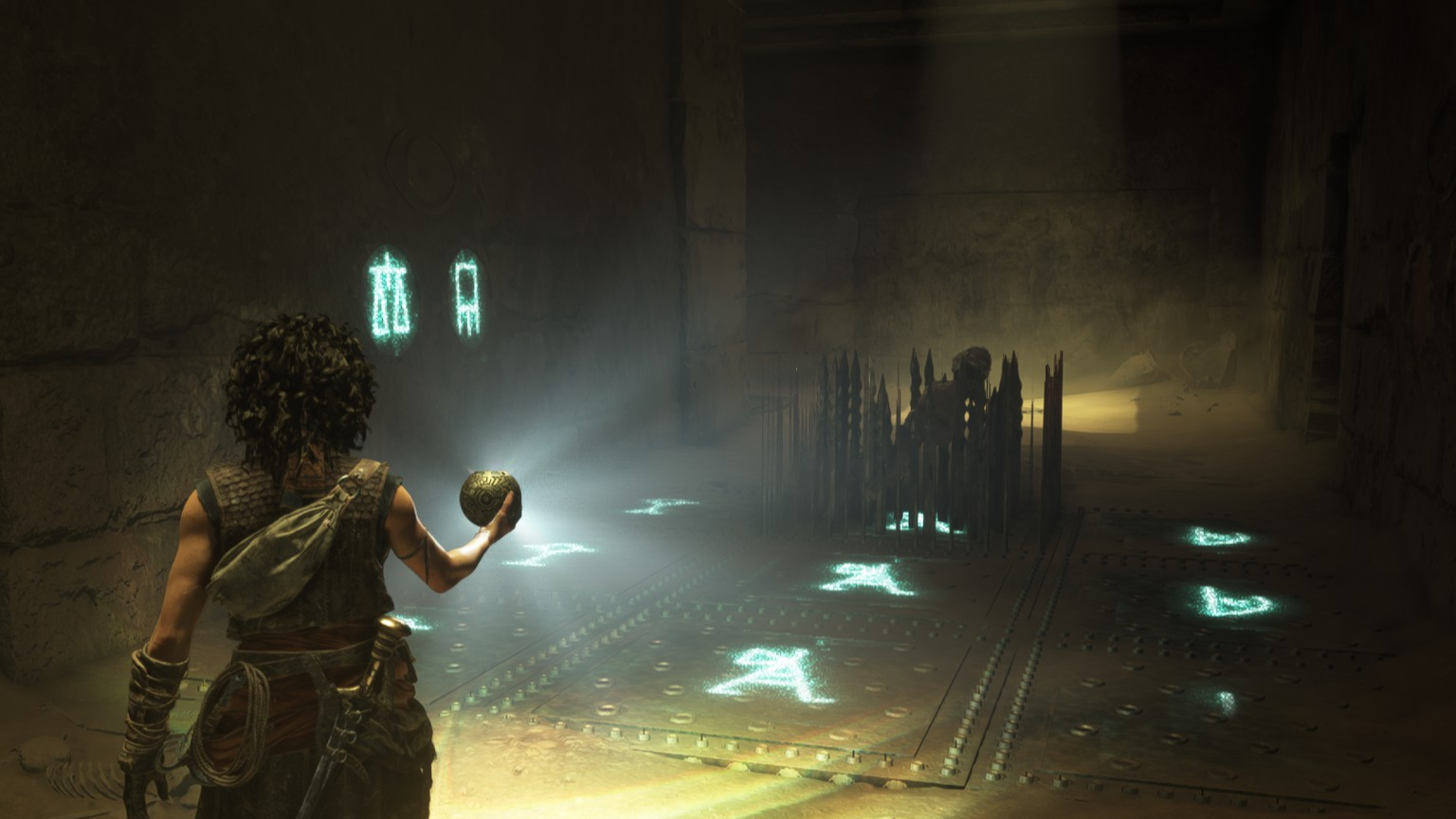
The slow ramp of difficulty that you enjoyed in the base game does not occur with Orpheus Ascending. Croteam doesn’t ease you back into things one bit: it’s 0-100 immediately. I found myself second guessing if I was ever good at puzzles. This lead me to skip many puzzles and came back to them later and, to my absolute disgust, I watched a few YouTube tutorials to help get me unstuck on some of the real head-scratchers — something I never had to do when playing through the first time.
I don’t think they should have listed Orpheus Ascending as the first of the three parts of the DLC when it was easily the most difficult. In saying that, the high level difficulty didn’t bother me – the game is meant to be challenging and oh boy was it ever.
READ MORE: Review | SCHiM (PlayStation 5)
But I did find that similar to the base game, Croteam introduced new mechanics without providing any real context on how they worked, despite those mechanics being necessary to complete the puzzles. This is where I found YouTube helpful, I’d watch the first little part of a video, realise that I didn’t know about some specific mechanic which was essential to solve the video, and then pause it. With the mechanic now known to me solving the puzzles became far more straightforward.
Isle of the Blessed
If Orpheus Ascending was a classic Talos Principle experience, Isle of the Blessed was a breath of surprising fresh air. Playing as Yaqut, who featured in the main campaign as one of your companions who explored the Megastructure, you find yourself on a Caribbean-themed family holiday with all of the major characters from the first game. Put aside the deep and meaningful philosophical questions that you’re used to – it’s time for a topical holiday with the fam’!
One of the inhabitants of New Jerusalem, Barzai, has created a holiday park that is full of puzzles to be solved. Unlike the main game though, this is a low stakes adventure, with nothing on the line. Instead, Yaqut challenges himself to complete the puzzles to prove to his family (and mostly himself) that he can. Although mostly, he seems to be doing it to impress Miranda, his girlfriend, with the first objective given when you land on the island “Impress Miranda”.

This was a massive change of pace from the rather heavy resurrection themes of Orpheus Ascending. The family are in a group voice chat, with banter, jokes and light-hearted discussions occurring as you complete your puzzles. You even hear 1k’s voice for the first time, who up until this point was a player character with no voice lines at all! Most endearing though, is the self-narration you get from Yaqut, who is incredibly chuffed with himself as completes puzzles.
READ MORE: Review | Dungeons of Hinterberg (PC)
Isle of the Blessed ramps up the difficulty far slower than Orpheus Ascending – so much so that I really think it should have been the first option presented. It starts slow, providing new mechanics in simple puzzles, and then ramps the difficulty up, making you employ those mechanics in new and unusual way. I found it to be easier to jump into and a bit of a smoother journey – even if the storyline veers from the more serious path that Talos usually takes.

Into the Abyss
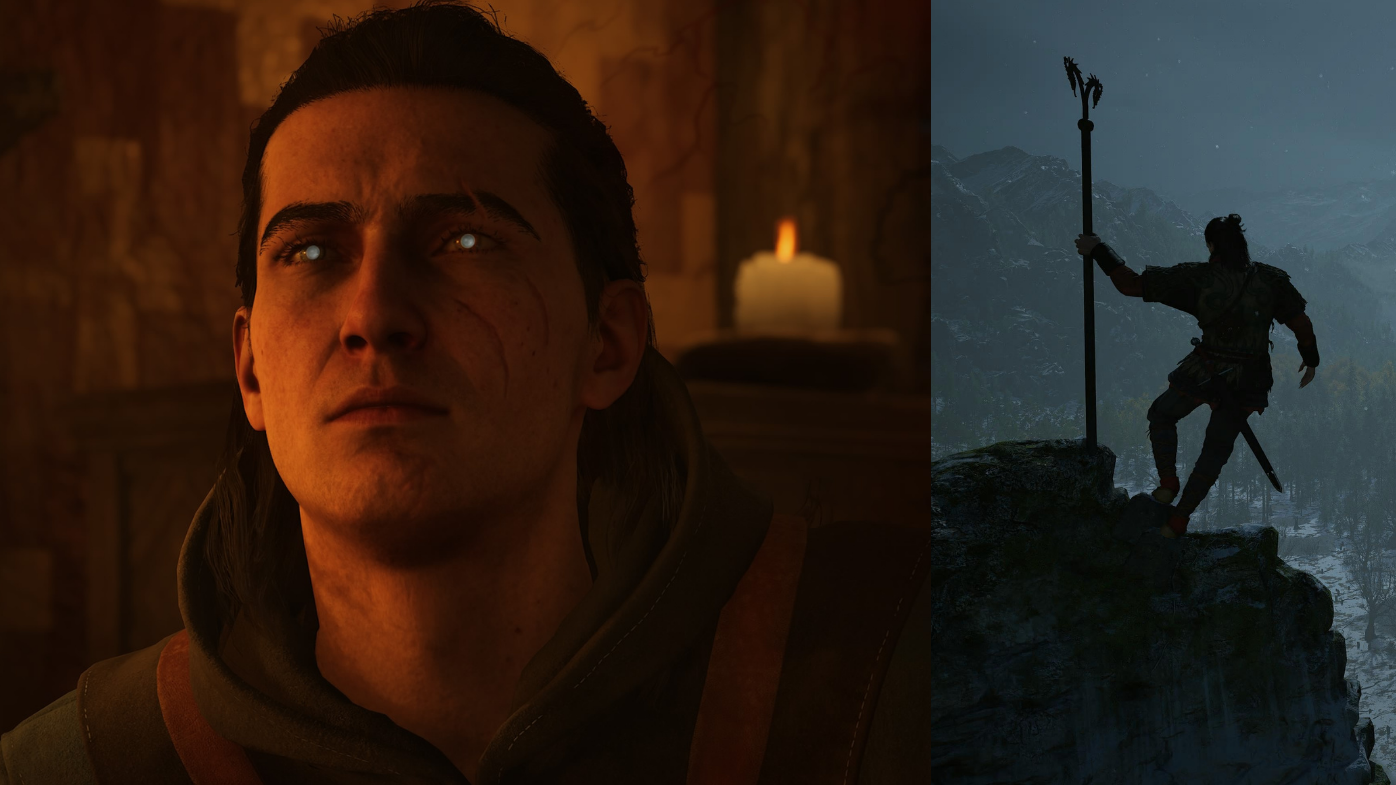
The third and final part of the DLC explores Byron’s experience when stuck inside the Megastructure. In the main game, the player saw Byron collapse, but then the Megastructure started to shut down, forcing you to escape, leaving your friend behind.
Into the Abyss begins with a beautiful cut-scene where Byron and Alcatraz discus the progress humanity has made using the knowledge they gained during the first expedition. The stage is set for an exploration of how Byron has changed since being stuck, and how his experience has guided his action since then.

It picks up right where 1k saw Byron collapse, with him being told by Elohim (‘God’ from the first game: he’s back, yay!) that he’s stuck inside Athena’s mind (Athena was who you rescued in the first game – you keeping up?) and that you’re experiencing her thoughts and fears. You’re told you cannot escape yourself, but that completing the trials laid out for you will assist your friends in locating you…
READ MORE: Review | Paper Trail (PC)
The difficulty of Into the Abyss felt like a middle ground between Orpheus Ascending and Isle of the Blessed. It didn’t provide you with any simple tutorial puzzles, but it started with mechanics and solutions that were common in the base game, so the difficulty was in cracking the nut – not working out it was a nut to begin with. Newer mechanics were introduced as time went on, but it felt like a natural progression of difficulty.
My main feedback is that to me, logically, the three parts of the DLC should potentially have been laid out in order of difficulty: Isle of the Blessed, Into the Abyss, Orpheus Ascending – but hey, maybe it’s not a big deal?

The puzzling nature of puzzles
What is it about puzzles that are so satisfying? Why do we gain satisfaction out of putting a strangely shaped piece of cardboard into a little slot next to another strangely shape piece of cardboard? Where do people find the motivation to teach themselves the formulas that help you solve a Rubik’s cube?
And how are we able to motivate ourselves to try another pattern, another sequence to finally figure out the solution to a puzzle you’ve spent 15 minutes on in The Talos Principle 2?
What is it about human nature that not only drives us to solve puzzles, but drive us to create them too? I’m sure there will be philosophers and psychologists who will have written papers explaining the human condition and how it drives us towards problem solving for some reason or another. But I personally don’t know.

Should I buy Talos Principal 2: Road to Elysium?
What I do know, is that I love puzzles – in many forms. I love traditional puzzles, I love brainteasers, I love sudoku and crosswords, I hate Rubik’s cubes (but only because I’ve never taught myself how to solve them), and boy howdy do I love puzzle video games. Portal and Portal 2 remain some of my favourite games ever, with the multiplayer of the second game being likely my favourite multiplayer gaming experience ever. The Talos Principle broke my teeny brain when it came out, and the sequel accomplished the same thing.
This DLC for The Talos Principle 2 was of an incredibly high standard. Realistically, it struck me more as an ‘expansion pack’ of old than the DLCs that I’m used to seeing released for games these days. A large amount of content, that added to and enhanced the base game. I thoroughly enjoyed it and would definitely recommend it!
The Talos Principle 2: Road to Elysium DLC is available for purchase now via Steam, Xbox and PlayStation.
Quest Daily scores The Talos Principle 2: Road to Elysium:
9/10
Quest Daily was provided with a copy of The Talos Principle 2: Road to Elysium for the purpose of this review.