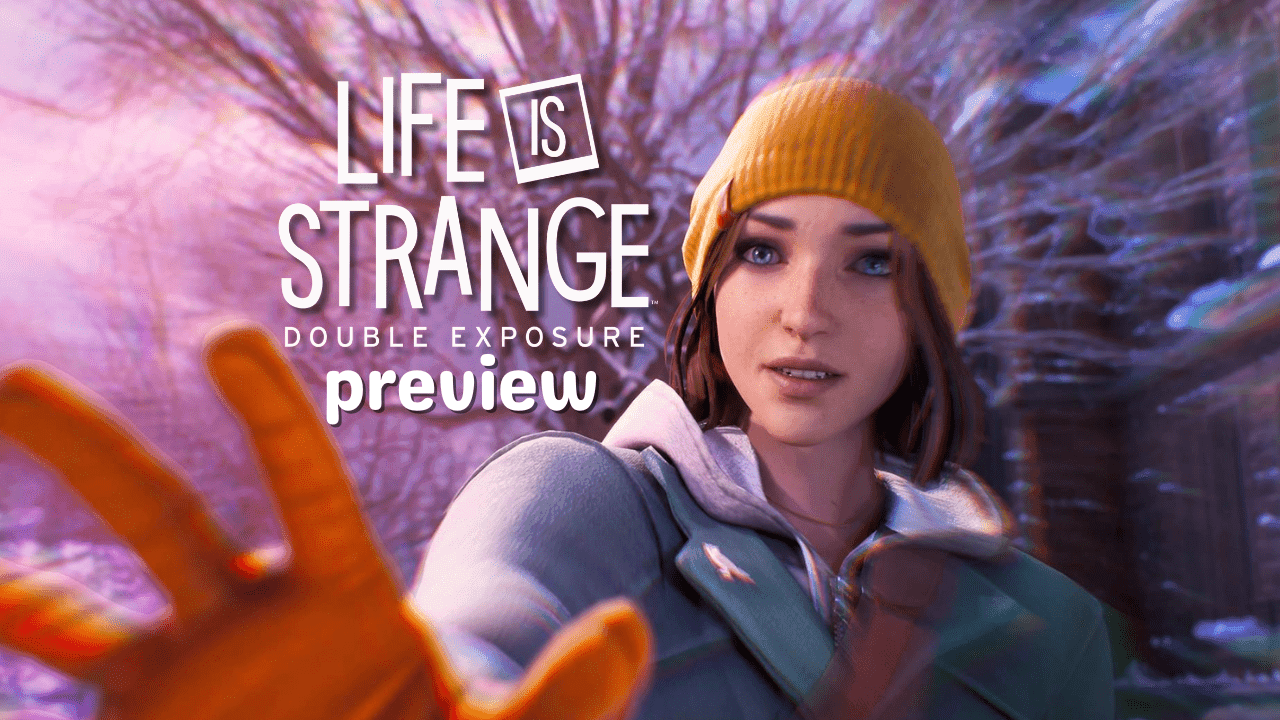
Double Exposure, the fifth installment in the Life is Strange series, marks the return of Max Caulfield, the original protagonist whose time bending powers first captivated players nearly a decade ago. While her quirky sense of humour and fondness for dad jokes remain intact, Max’s subtle changes in appearance reflect the passage of time.
The decade since the life-altering events in Arcadia Bay have left their mark, giving players a sense of both nostalgia and growth as they reconnect with her.
As someone who graduated high school the same year the original game was released, returning to Max’s world felt like reconnecting with an old high school bestie.

READ MORE: Review | Neva ‘Transcends The Boundaries’ (PC)
Max Caulfield’s Return to Centre Stage
In Double Exposure, Max has finally realised her dream of becoming a professional photographer. Now an established guest lecturer at a university far from Arcadia Bay, she finds herself in new company — Safi and Moses replace Chloe Price as her closest confidants. Yet, the past remains an integral part of the story. Early on, players are once again presented with the same choice they faced at the end of the first game: save Arcadia Bay or Chloe. It’s a bold move by the developers, signalling a willingness to revisit and embrace the series’ defining decision, rather than ignore it.
However, Double Exposure also feels deliberately nostalgic. Longtime fans of the series will appreciate its quirky style, but newcomers might find themselves puzzled by Max’s humour or the broader themes at play. For some, this return to familiar territory might feel a bit like déjà vu. Whether that’s a strength or a weakness depends on your perspective. So far, after two chapters and around nine hours of gameplay, it does feel like there are deeper layers yet to emerge in this narrative.
Minor early game spoilers ahead.
Max’s New Time-Twisting Powers

Rather than rewinding time, Max now can jump between two timelines. One where her friend Safi has been murdered and another where she is alive. This shift in mechanics raises the stakes; without the rewind, decisions feel weightier, similar to Life is Strange: Before the Storm. As in previous titles, you can see how your choices compare to other players. Navigating both timelines, it is particularly uncertain which one will serve as your true endpoint.
READ MORE: Life Is Strange: Double Exposure, a Time Bending Murder Mystery

I couldn’t help but draw some comparisons to Dishonored 2’s Stilton’s Mansion level, where Corvo used a device to jump between the past and present. In Double Exposure, Max can switch timelines using sparkly doorways. Orange lights take her to the “alive” timeline, while blue ones return her to the “dead” timeline. Although this adds an interesting layer to the gameplay, the transitions feel more limited and less dynamic than in Dishonored 2, as the jumps are tied to specific locations.
Picture This: The Double Exposure Mechanic & Symbolism

While players can take their own pictures, I was disappointed that the game pre-frames them in ways that limit creativity. Allowing players to craft their own images from scratch would have been more rewarding, ensuring a personal touch to the experience.

Double Exposure replaces the butterfly imagery of the first game with owls, symbols of wisdom and self-actualisation. There are also a few mentions of a cryptid: Mothman. The concept of duality is visually reinforced by the two timelines Max navigates, and Max’s interest in “double exposure”, making the title an apt reflection of the story’s core themes.
READ MORE: Review | Nobody Wants to Die ‘A Haunting Vision of a Dystopian Future’ (PC)
A Visual Overhaul in Double Exposure


From a technical perspective, the game’s character animations and facial expressions represent a huge leap forward. Comparing Max’s movements and visual style in the original Life is Strange (2015) to those in Double Exposure is like night and day. Even compared to True Colors (2021), there is a noticeable improvement. Fans will also appreciate the return of Max’s original voice actress, Hannah Telle.

Double Exposure retains some of the series’ hallmark features, such as Max’s internal monologues and diary entries, but it introduces new ways to engage with the world. Through her phone, players can text other characters, read past conversations, and navigate Crosstalk, a social media app reminiscent of Twitter or Facebook. These interactions shift depending on the timeline Max is in, adding a subtle layer to the narrative.
Accessibility & Performance

There are options to toggle content warnings for sensitive topics like abuse, drugs, or transphobia. As well as extend the timer for making decisions, and even confirm major choices before committing to them. For a series that tackles difficult themes, these features make the game more approachable to those who might otherwise feel overwhelmed.

During my preview, I encountered a few visual glitches and a progression bug that required a checkpoint restart. While the issues weren’t game-breaking, they were noticeable. However, on my return a few days later, the technical hiccups didn’t persist, suggesting some last-minute polishing or that later chapters were more refined.

How’s it shaping up?
It might be my bias, having played the first Life is Strange all those years ago, but I deliberately avoided reading the Steam page or watching trailers to dodge spoilers. I’m glad I did. Not knowing key plot points in advance made the unfolding narrative much more powerful for me. The preview ends at the perfect cliffhanger, leaving you hungry for more, which is exactly how I wanted to feel at this stage.
As for the pricing, I’m still on the fence about the $45 AUD difference between the Standard and Ultimate editions. The extras — five outfits and “exclusive cat content” — don’t seem particularly compelling to justify the price jump.
Overall, Life is Strange: Double Exposure feels like a heartfelt return to the series’ roots while also pushing its narrative and gameplay mechanics into new territory. If the remaining chapters build on the promise of the first two, Double Exposure has the potential to be one of the series’ most memorable entries.

Life is Strange: Double Exposure is set to release on October 30th, though players who pre-purchase the game will be able to play the first two chapters two weeks ahead of the full release.
Double Exposure will be available on PC via Steam it will also be available on PlayStation 5 and Xbox Series X|S.
Early access to Life is Strange Double Exposure was granted to Quest Daily by the publisher.