It’s no secret that making video games requires a sheer amount of patience, courage and determination. For those who weather the turbulent industry, however, the rewards can be well worth it.
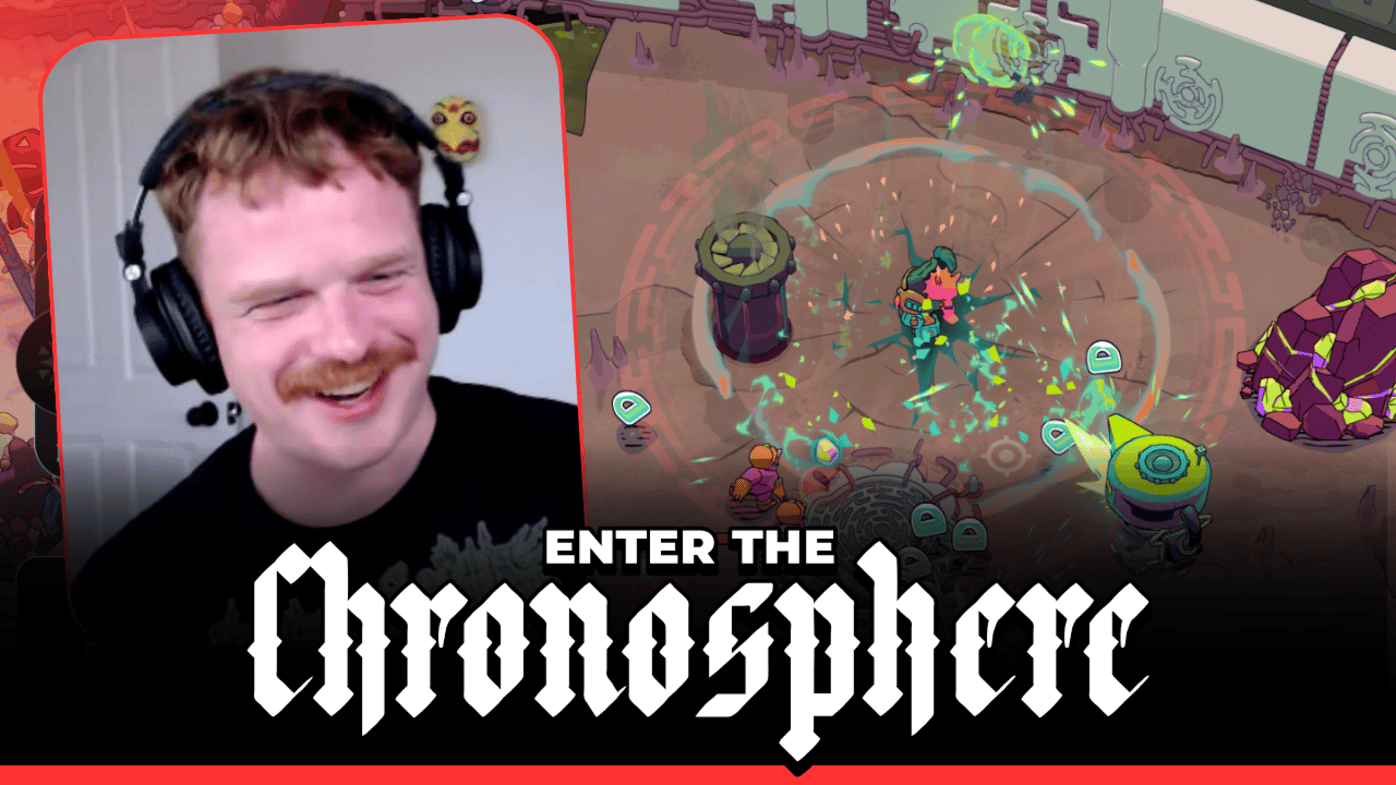
From early days in the industry to co-founding Effort Star, and now releasing his most ambitious game in early access, I talked to Rhys Van Der Waerden about what his journey as a game developer has looked like so far.
From Humble Beginnings
Van Der Waerden studied video games at RMIT University, Australia and graduated in 2012. Shortly after, he worked for an indie Australian studio, League of Geeks, before heading into web development.
When working as a web developer for several years, however, he couldn’t escape the feeling that he “just wanted to his own thing” — make video games.

Whilst working on his own games on the side, his passion was reignited. Taking a huge leap of faith, Van Der Waerden resigned from his job in 2019 and decided to return to the gaming industry — but this time to start up his own indie game company.
“I’ll give myself two years and if I’m not making money, I’ll stop. And I think that ended up being maybe like four years or something,” he reminisced.
A Dynamic Duo
In 2021, Van Der Waerden and his team released a game titled Negative Nancy. Though they were proud of it — and Negative Nancy was a fun game to make — he told QD it was not exactly a success.
“It was more just something to do during [Covid-19] lockdown. And I’m still very proud of it, but it made no money and I was just like, what am I doing? Like, this is — I don’t know, it’s such an infantile thing for me to be pursuing and not making any money at all,” he said.
Van Der Waerden and Ned Kirner, their game designer, teamed up afterwards in a game jam for one last hurrah. “Let’s just see if the two of us can make something cool, and if it’s cool, we’ll give it one last shot… If we need to, we can just eat cheaply and live cheaply and get it done without any investment,” he recalls in a conversation with Kirner.

Van Der Waerden and Kirner spent a gruelling week working on a roguelike that eventually became the prototype for their latest game, Enter the Chronosphere.
“It was so successful… The prototype was the best thing we had ever done,” Van Der Waerden said.
They entered the prototype into several competitions, including IGN’s Rogue Jam for Huge Potential and the Seven Day Roguelike Challenge (7DRL), winning first place in both competitions.
Armed with these incredible accolades and government funding from VicScreen Australia, Van Der Waerden and Kirner were now ready to make the dream real. Effort Star was thus born in 2022, with the pair as co-founders.
Effort Star’s Evolution
After scaling up the size of the team, finding a publisher and a “pretty painful” transition from 2D to 3D art, a demo for Enter the Chronosphere was released.
Over the past few years, the team has been responsive to feedback in various forums like Discord and Steam, even crediting players that find bugs in their changelogs.

Enter the Chronosphere is now in early access and looking slick, with plenty of new biomes, weapons and missions on the way. Van Der Waerden and the team value feedback of any kind, with their objective to make the game “as good as possible.”
“Early access is just such an obvious thing to do. Because it, you know, it creates that expectation in place that they can tell us what they want to see in the game,” he said.
“They can tell us what they like, what they don’t like, and we will respond to it… There’s a lot of flexibility in our plans and there’s a lot of different ways to play the game.”
Advice for New Game Developers
Van Der Waerden’s story is nothing short of inspiring. His biggest advice for those who are looking to enter the gaming industry is to “have plans that are well within what you can control”.
“If you want to make a game that requires external funding or something like that, and you can’t control that. You got to think: what’s going to happen if you can’t get that funding? What’s your plan going to be?
“In our case… we weren’t artists and we didn’t know that we were going to be able to afford an artist… [but] we would still have made the game if that never happened,” he said.

Finally, there are so many moving parts in making games that there is always the “risk of the unknown”.
Upon embarking on a new project — or a run in Enter the Chronosphere — start with what you’ve got, and take the rest one action at a time.